Newslaundry calls Hindus-only restriction in Garba events "Hindutva conspiracy", downplays numerous incidents of assault and harassment
 India
India  6 October, 2024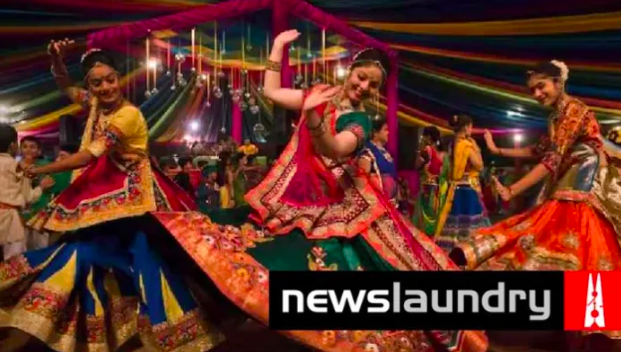
Case Summary
The left-liberal ecosystem, particularly media outlets like Newslaundry, showed displeasure over the restrictions imposed by Garba organisers that limit entry to Hindus only. These restrictions came after Hindu rights organisations raised awareness about incidents where Muslim men entered Garba events under false identities, often leading to cases of harassment and assault on Hindu women. In its critique, Newslaundry published an article titled "After media’s ‘Garba Jihad’ bogey, Hindi newspaper’s garba event ‘only for Sanatani Hindus’", dismissing concerns about "Garba Jihad" as a mere Hindutva conspiracy theory. It highlighted how organisers of Garba events in places like Bhopal explicitly restricted entry to "Sanatani Hindus," which was deemed discriminatory by leftist groups. Newslaundry criticised this policy, citing complaints from attendees, including a woman who was “allergic” to vermillion (tilak) but was forced to apply it to gain entry. The article also claimed that some non-Hindus were asked for Aadhaar cards or checked for religious symbols like lockets or sacred threads to verify their Hindu identity. Newslaundry’s article targeted sponsors like Patrika and Red FM, who supported such events. The publication’s marketing head in Bhopal later withdrew from the event, calling the “Hindu-only” policy discriminatory. However, the left-liberal argument failed to recognise the genuine safety concerns of the Hindu community, who, based on numerous incidents, believed that these restrictions were necessary. Over the years, multiple incidents showed the real threat to Hindu women during Navratri’s Garba celebrations. In Madhya Pradesh’s Alirajpur, on the same day the Newslaundry article was published, a Muslim youth was caught molesting a woman returning from a Garba event. In Ujjain, a man named Feroz, posing as a Hindu (Rahul), entered a Garba event with condoms, indicating malicious intent. He was apprehended by members of the Hindu Jagran Manch. In the Guna district of Madhya Pradesh, five Muslim youths were detained for suspicious behaviour at a Garba Pandal. In October 2022, eight Muslim men were arrested in Indore for attempting to enter Garba venues while concealing their identities. In a disturbing case from Rajasthan, a youth named Madhusudan Modi was stabbed by three Muslim men, Shahrukh, Zubair, and Samir, during a dandiya event in Bikaner. The men had entered the Garba event to harass women. In another incident in Hyderabad in 2022, a Muslim man named Fareed Shah attempted to enter a Garba event by posing as a Hindu to lure women. He was stopped by Bajrang Dal activists. Additionally, in Vadodara, six Hindu students were attacked with iron belts and stones by four Muslim men for objecting to Islamic songs being played during a Garba event at a college.
Why it is Hate Crime ?
This incident has been added under the category- Hate speech against Hindus. Under this, the subcategory selected is- Anti Hindu subversion and prejudice, and the tertiary category selected is- Anti-Hindu fake news and downplaying. Hate speech is defined as any speech, gesture, conduct, writing, or display that is prejudicial against a specific individual and/or group of people, which is leading to or may lead to violence, prejudicial action or hate against that individual and/or group. Media plays a specific and overarching reach in perpetuating prejudicial attitudes towards a community owing to unfair, untrue coverage and/or misrepresentation/misinterpretation, selective coverage and/or omission of facts of/pertaining to issues affecting a specific religious group. This type of bias can dehumanise the victim group, making it easier for others to justify harmful actions against them, which aligns with the objectives of hate speech laws aimed at preventing such harm. It is often observed that the media takes a prejudicial stand against the Hindu community, driven by their need to shield the aggressor community, which happens to be a numeric minority, however, is the one perpetrating violence against Hindus. For example, the media is often quick to contextualise religiously motivated crimes against Hindus, omit or misrepresent facts that point towards religiously motivated hate crimes, justify and/or downplay religiously motivated hate crimes or simply present fake news to stereotype Hindus. Such media bias leads to the denial of persecution and is often used to dehumanise Hindus, leading to justification for violence against them. For example, the media covered several fake allegations of Hindus targeting Muslims and forcing them to chant Jai Shree Ram. Most of these cases were proved false and fabricated after police investigation. These fake news reports were subsequently never retracted or clarified. Such fake news led to the justification of violence and dehumanisation of Hindus based on the argument that since Hindus targeted Muslims and forced them to chant Jai Shree Ram, the dehumanisation of Hindus and violence against them was par for the course and merely a retaliation. Such media bias leads to prejudicial portrayals of Hindus and offers a justification for violence against them and, therefore, is considered hate speech under this category. This case has been recorded as a hate crime under anti-Hindu subversion and prejudice, as it involves the systematic dismissal and delegitimisation of concerns raised by Hindus regarding their safety and religious spaces. The controversy centres around restrictions imposed by Garba organisers limiting entry to Hindus, which were introduced in response to repeated incidents where individuals entered such events under false identities, leading to harassment and assaults on Hindu women. These restrictions were not arbitrary but arose from a pattern of reported incidents that created genuine safety concerns within the Hindu community. A key marker in this case is the response of sections of the left-liberal ecosystem, particularly media platforms such as Newslaundry, which dismissed these concerns as a “conspiracy theory” and framed the restrictions as discriminatory. By characterising documented patterns of harassment and deception as a fabricated narrative, such coverage undermines the lived experiences and security concerns of Hindus. This form of narrative framing shifts the focus away from the reported incidents and instead portrays the defensive measures taken by the Hindu community as unjustified or exclusionary. The dismissal becomes particularly significant when viewed alongside multiple reported incidents across regions where individuals allegedly entered Garba events under false identities and engaged in misconduct, including harassment, stalking, and violence against Hindu women. These incidents form the basis on which organisers and community members sought to implement precautionary measures. Ignoring or trivialising such patterns not only erases the context behind these decisions but also contributes to an environment where concerns specific to Hindus are not taken seriously. Furthermore, the critique of identity verification measures, such as checks for religious symbols or identification documents, reflects a broader pattern in which Hindu religious spaces are expected to remain open without safeguards, even in the face of repeated security concerns. When the community attempts to regulate access to its own religious or cultural events for safety reasons, it is portrayed as discriminatory, while the underlying reasons for such measures are minimised or ignored. This asymmetry in narrative construction contributes to a perception of bias. The focus is on questioning Hindu actions rather than addressing the pattern of incidents that led to them. Such framing can have a chilling effect, discouraging communities from taking steps to protect themselves and their members, particularly women, in religious spaces. Taken together, the dismissal of safety concerns, the framing of precautionary measures as discriminatory without acknowledging their context, and the broader pattern of trivialising issues affecting Hindus demonstrate clear markers of anti-Hindu prejudice. By delegitimising the concerns of the Hindu community and reframing protective measures as unjustified, such narratives contribute to the erosion of their right to safeguard their religious and cultural spaces. Accordingly, this case has been recorded in the Hinduphobia Tracker database under hate speech against Hindus, specifically under anti-Hindu subversion and prejudice.


Case Status
Unknown


Perpetrators Details
Perpetrators
Others
Perpetrators Range
N/A
Perpetrators Gender
unknown
 Sources




