Facebook page indulges in iconoclastic representation of Hindu deities to promote homosexuality
 Indore, Madhya Pradesh, India
  26 March, 2023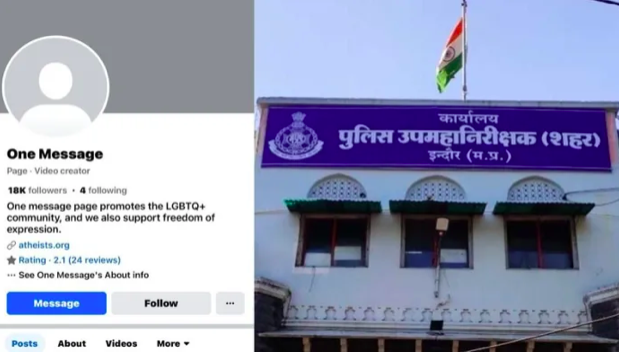
Case Summary
A law student named Sapna in Indore filed a complaint with the Police Commissioner regarding a Facebook page called "One Message," accusing it of hurting Hindu sentiments by showcasing Hindu deities, Ayodhya's Ram temple and saffron colour indecently. She and her lawyers, Dr Rupali Rathod and Krishna Kumar Kunhare, lodged the complaint, prompting the Commissioner to direct the cyber team of the Crime Branch to investigate the matter. Sapna said in her complaint that the page, in an attempt to promote the LGBT community, insulted Hindu deities by posting obscene pictures of hugging and kissing, along with derogatory remarks about women being sinners by birth. In one picture, a Bajrang Bali flag was handed over to a semi-nude woman. The complainant said that an attempt has been made to defame the Hindu religion through the portrayal of the Bhagwa colour in an obscene attire. Despite assurances from the police, the objectionable activities on the page had not ceased entirely, although some offensive images had been blurred.
Why it is Hate Crime ?
According to case details, this case has been added to the hate tracker under two prime categories. The first is- Attack on Hindu religious symbols. Under this, the sub-category selected is- Iconoclastic representation of Hindu Gods/Goddesses- An icon is a symbol of someone or something that is revered, or a religious representation of a spiritual ideal. Iconography is of vital significance in the Hindu milieu. It helps connect people’s spiritual beliefs with the real world. Iconography within the Hindu faith takes several shapes and forms. Murtis are of most significance to Hindus, to which daily rituals, prayers and offerings are done. Besides the murtis, there are several other symbols which have deep significance in the Hindu faith – the Om and Swastika for example. Any iconoclastic representation of these symbols, images and murtis is an affront to the religious beliefs and faith of the Hindu community itself since the symbols and icons are deeply religious in nature. In this sub-category of crime, we would record hate crimes and iconoclastic representations, in words, art, or any other form of representations of symbols that hold religious significance for the Hindu community. Since these symbols, icons and murtis are central to the Hindu faith, any iconoclastic representation of these symbols is born out of animosity towards the faith itself, manifesting itself through these symbols and therefore, these representations would be considered religiously motivated hated crimes. The second primary category the case is being added to is 'hate speech against Hindus' under the sub-category 'anti-Hindu slurs, mocking faith'. Anti-Hindu slurs and the deliberate mocking of the Hindu faith owing to religious animosity involve the usage of derogatory terms, stereotypes, or offensive references to religious practices, symbols, or figures. One of the common anti-Hindu slurs used against Hindus is “cow-worshipper” and “cow piss drinker”. The intention of using this term is to demean and mock Hindus as a group and their religious beliefs since Hindus consider the cow holy. Additionally, some symbols and the slurs attached to them have a historical context that exacerbates the insult, hate, stereotyping, dehumanisation and oppression against Hindus. Cow worship has been used for centuries to denigrate Hindus, insult their faith and oppress Hindus specifically as a religious group. There has been overwhelming documentation about how cow slaughter has been used to persecute Hindus with cow meat being thrown in temples and places of worship. There has also been overwhelming documentation where cow meat (beef) has been force-fed to Hindus to either forcefully convert them to Islam or denigrate their faith. Apart from cow worship, the Swastika – which holds deep religious significance for the Hindus – has also been misinterpreted and distorted to use as a slur against Hindus. Similarly, the worship of the Shivling has been used by supremacist ideologies and religions to denigrate Hindus owing to religious animosity. Such slurs and denigration stem out of inherent animosity and hate towards Hindus and their faith, therefore, it is categorised as hate speech targeted at Hindus specifically owing to their religious identity. Here, a Facebook page "One Message" in its attempt to promote the LGBT community, displayed Hindu deities, the Ram temple, and the saffron flags indecently, using obscene imagery and derogatory comments. These iconoclastic representations, particularly involving sacred symbols like the Bhagwa (saffron) colour and revered deities undermine the faith of the Hindus and delegitimise the faith of Hindus. The portrayal of religious icons in an obscene and disrespectful manner reflects a larger pattern of animosity toward Hinduism. By depicting sacred symbols such as the Bajrang Bali flag being handed to a semi-nude woman, the page crosses the boundary from freedom of expression into deliberate insult. Such actions undermine religious reverence, suggesting a targeted intent to defame and mock Hindu beliefs.


Case Status
Complaint filed


Perpetrators Details
Perpetrators
Others
Perpetrators Range
N/A
Perpetrators Gender
unknown
 Sources




