Muslim journalist attempts to peddle Hindu terror theory using fake news
 Sambalpur, Odisha, India
  25 March, 2024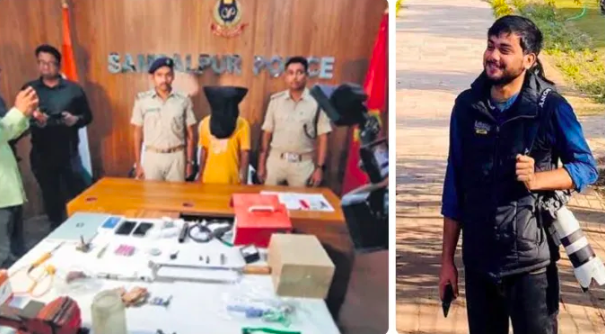
Case Summary
On March 26, 2024, an explosion occurred near a mosque in Peer Baba Chowk of Sambalpur, Odisha. The following day, police apprehended a 19-year-old youth named Abhilash Mishra in connection with the incident. Initial reports led some to label it as a communal act of terrorism due to Mishra's Hindu identity. Meer Faisal, a journalist, wrote on X, “Sambalpur bomb blast accused Sambalpur police have arrested Avinash Mishra. Three people were injured in the incident. It was a terrorist attack, yet no national media outlet reported on it because the accused was a Hindu.” Notably, Meer Faisal’s previous account was withheld in India after multiple cases of fake news. Another propagandist, Md Asif Khan wrote, “Where is Indian Media?? Why is no one talking about this bomb blast? Isn’t it a terror attack?” However, subsequent investigation by the police revealed that it was a case of personal revenge and not driven by communal motives. The accused confessed to the crime, and police recovered materials used to make the pressure bomb from his residence. Mishra, a second-year ITI student, allegedly hurled the bomb towards the mosque from a flyover and fled on his bicycle, resulting in injuries to three individuals and damage to a vehicle. Sambalpur police swiftly resolved the case within 24 hours and arrested Mishra under various sections of the law. It was discovered that Mishra had a personal vendetta against Sushil Paika, a member of an Instagram group “SBP Mafia Gang”, leading him to orchestrate the bombing to frame Paika. Claims suggesting terrorism or communalism in the incident were debunked as false following the investigation.
Why it is Hate Crime ?
This case has been classified as religiously motivated hate speech under the category- Hate speech against Hindus. Under this, the sub-category selected is- Anti-Hindu Subversion and Prejudice and the tertiary category Mislabelling/Misrepresentation of Perpetrator's Religion as Hindu, due to the deliberate framing of the incident in a manner that falsely attributes communal motives to a Hindu individual. Hate speech is defined as any speech, gesture, conduct, writing, or display that is prejudicial against a specific individual and/or group of people, which is leading to or may lead to violence, prejudicial action or hate against that individual and/or group. Media plays a specific and overarching reach in perpetuating prejudicial attitudes towards a community owing to unfair, untrue coverage and/or misrepresentation/misinterpretation, selective coverage and/or omission of facts of/pertaining to issues affecting a specific religious group. This type of bias can dehumanise the victim group, making it easier for others to justify harmful actions against them, which aligns with the objectives of hate speech laws aimed at preventing such harm. It is often observed that the media takes a prejudicial stand against the Hindu community driven by their need to shield the aggressor community which happens to be a numeric minority, however, is the one perpetrating violence against Hindus. For example, the media is often quick to contextualise religiously motivated crimes against Hindus, omit or misrepresent facts that point towards religiously motivated hate crimes, justify and/or downplay religiously motivated hate crimes or simply present fake news to stereotype Hindus. Such media bias leads to the denial of persecution and is often used to dehumanise Hindus, leading to justification for violence against them. For example, the media covered several fake allegations of Hindus targeting Muslims and forcing them to chant Jai Shree Ram. Most of these cases were proved false and fabricated after the police investigation. These fake news reports were subsequently never retracted or clarified. Such fake news led to the justification of violence and dehumanisation of Hindus based on the argument that since Hindus targeted Muslims and forced them to chant Jai Shree Ram, the dehumanisation of Hindus and violence against them was par for the course and merely a retaliation. Such media bias leads to prejudicial portrayal of Hindus and offers a justification for violence against them and therefore, is considered hate speech under this category. Despite the police investigation confirming that the explosion was an act of personal revenge with no communal or terror-driven intentions, Muslim journalists on social media misrepresented the accused’s identity to project the incident as a Hindu-perpetrated terrorist attack. Such mislabeling not only vilifies the Hindu community but also fosters a false narrative of Hindus being aggressors. This misrepresentation is a clear example of anti-Hindu prejudice, aiming to malign the community's image by framing the act as religiously motivated and further the 'Hindu terror' conspiracy theory. Essentially, the attempt was to delegitimise the religiously motivated hate crimes against Hindus by Muslim radicals by claiming that it is the Hindu community which is indulging in religious motivated terror attacks against the Muslim community - a narrative which is based on falsities. Such acts are rooted in animosity against Hindus and Hinduism, which is why this case has been added to the tracker.


Case Status
Unknown


Perpetrators Details
Perpetrators
Muslim Extremists
Perpetrators Range
One Person
Perpetrators Gender
male
 Sources




