Hindu man arrested by Bangladesh police over false allegation of 'blasphemy'
 Faridpur District, Bangladesh
  25 December, 2025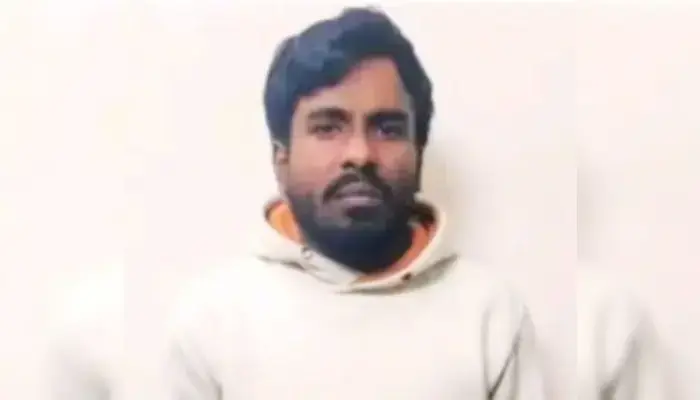
Case Summary
In the Faridpur district of Bangladesh, a 22-year-old Hindu youth named Joy Sarkar was arrested by the Bangladesh police over a false allegation of blasphemy against Islam. Sarkar was arrested for merely writing: “Sanatana Dharma (Hinduism) is the oldest religion.” According to media reports, the victim was arrested on 26 December 2025. Police sources confirmed that at approximately 8:05 pm on 26 December 2025, a Facebook account named “Arafatul Ashik” published a post related to Islamic history. In the comments section, Joy Sarkar, son of Shankar Kumar Sarkar and a resident of Alipur (Ward No. 11) under Faridpur Kotwali Police Station, responded with a remark deemed blasphemous by Muslims. The comment deemed “blasphemous” consisted of a single line: “Sanatana Dharma is the oldest religion.” Screenshots were first shared in a Messenger group named “Loge achi.com” and then rapidly disseminated across social media platforms. Within hours, the images went viral. As online outrage mounted, tensions flared across Faridpur town, leading to the arrest of Joy Sarkar. Following this, on 27 December 2025, a formal case was lodged at Kotwali Police Station by Mohammad Sarafat Ahmed Shubho, who said that he was filing the complaint “on behalf of all citizens of Faridpur district.” Police confirmed that Joy Sarkar remained in custody and that the allegations were under investigation. The Officer-in-Charge stated that if the accusations proved true, “strict legal action” would be taken. Police claimed to maintain a zero-tolerance stance on any act that "hurt religious sentiments," emphasising that no one involved in such incidents would receive leniency. A fresh wave of anti-Hindu violence prevailed across Bangladesh following the death of Sharif Osman Bin Hadi. This escalation occurred against the backdrop of ongoing anti-Hindu violence that had persisted since the ouster of the Sheikh Hasina government in August 2024, during which Hindu homes, temples, and religious spaces were repeatedly attacked, and the Hindu community faced intimidation, arson, and mob attacks. In the aftermath of Hadi’s death, Hindu homes were selectively targeted and set ablaze in multiple localities by Muslim mobs, forcing families to flee and rendering many homeless. The violence was not sporadic but patterned, with Muslim mobs targeting Hindu neighbourhoods, properties, and religious symbols with impunity. One of the many victims of this wave of violence was a Hindu man named Dipu Chandra Das, who was brutally lynched by a Muslim mob over false allegations of blasphemy. Such targeting of innocent Hindus over fabricated charges illustrated the vulnerability of the Hindu minority under conditions of rising communal hostility. Posters and written materials calling for the extermination of Hindus were displayed in public spaces, signalling an alarming normalisation of genocidal rhetoric. Combined with acts of physical violence, arson, and vandalism, these developments demonstrated a coordinated campaign designed to terrorise the Hindu community and assert Islamic dominance. Notably, Sharif Osman Bin Hadi was a Muslim political activist and student leader known for his anti-Hindu and anti-India stance. He was actively involved in the political unrest that followed the fall of Sheikh Hasina’s government and was killed in Dhaka in December 2025 during clashes, after which Hindus were blamed and subsequently targeted.
Why it is Hate Crime ?
This case has been added to the tracker under the primary category of: Attack not resulting in death. Within it, the subcategory selected is: Attacked over 'Blasphemy. Blasphemy essentially refers to the desecration of anything which is held sacred/holy to a group of people. However, for religious supremacist groups, the elements of ‘blasphemy’ are ever-changing, shifting and expanding – leading to infringement on the rights of other religious groups, freedom of speech and expression, threats and even physical violence. There are instances where blasphemy is also used as a dog whistle to target Hindus owing to intrinsic animosity towards Hinduism. There are several instances where stating truths as mentioned in the non-Hindu doctrine itself has led to unmitigated violence against Hindus. There have also been instances where non-Hindus have themselves created a ‘blasphemous’ situation, like placing a Quran in a temple, to use it as an excuse to attack Hindus. Essentially, Blasphemy charges are often made up and/or are used to shut down any form of criticism of non-Hindu faiths and as a tool to target Hindus. Any physical violence over Blasphemy charges against Hindus is fundamentally based on animosity for Hindus and their faith, owing to religious supremacist ideologies; therefore, such attacks would be documented as religiously motivated hate crimes under this category. This case is added to the tracker due to the arrest of a Hindu youth, Joy Sarkar, over a false allegation of blasphemy against Islam. It is important to state that the victim did not commit any insult or abuse towards Islam, Muslims or their religious history. He only said, "Hinduism is the oldest religion", a fact that was deemed blasphemous and led to his arrest. The victim's arrest underscores how blasphemy accusations are often selectively applied against religious minorities, particularly Hindus in Bangladesh. This particular incident showcases how the Hindu youth was targeted with the state's iron hand over merely expressing his faith identity and its history, which was falsely deemed 'blasphemy'. This showcases a systemic pattern of religious oppression faced by Hindus in Bangladesh. Blasphemy laws, particularly in Muslim-majority countries like Bangladesh and Pakistan, are routinely weaponised to persecute Hindus. These laws frequently result in false or exaggerated accusations, enabling state-sanctioned or mob-led persecution. Even when there is no incitement to violence or the accused expresses remorse, the mere allegation is enough to spark outrage and legal action, often placing minority individuals, particularly Hindus, at serious risk. Muslims historically use blasphemy charges as a pretext to incite violence, settle personal scores, or intimidate Hindus into silence and submission. The disproportionate targeting of Hindus under these laws is not accidental but driven by deep-rooted religious prejudice, with blasphemy allegations serving as a tool of social control and communal suppression. This incident also reflects the deteriorating security environment for Hindu minorities in Bangladesh following the fall of the Sheikh Hasina government and the death of Osman Hadi. In the current political vacuum, radical Islamic elements gain influence, fuelling a sharp rise in anti-Hindu hostility and violence. Minority communities, particularly Hindus, now face intensified marginalisation, and cases like this reveal how legal instruments such as blasphemy laws are manipulated to maintain a climate of fear and exclusion. The arrest of Joy Sarkar is not an isolated incident but part of a larger, entrenched pattern of systemic religious persecution. Accusations, often flimsy or fabricated, in this case, a false allegation, are used to legitimise hate crimes and social ostracism, making it imperative to view this case through the broader lens of rising intolerance and targeted hostility against Hindus in the region, marking it as a religiously motivated offence. Notably, this incident occurred just days after a Hindu man named Dipu Chandra Das was mob lynched and killed by a Muslim mob in Mymensingh, Bangladesh, over a false blasphemy accusation. Dipu's body was also set ablaze by the Muslim mob. This incident of Joy Sarkar and previous instances of religiously motivated violence against Hindus in Bangladesh give a clear picture that this incident is part of the pattern of wider Hindu persecution in the country. Given that this meets the parameters of a religiously motivated offence, it is added to the hate crime database of the Hinduphobia Tracker.
Victim Details
Total Victim
1
Deceased
0
Gender
- Male 1
- Female 0
- Third Gender 0
- Unknown 0
Caste
- SC/ST 0
- OBC 0
- General 0
- Unknown 1
Age Group
- Minor 0
- Adult 1
- Senior Citizen 0
- Unknown 0


Case Status
Unknown


Perpetrators Details
Perpetrators
State and Establishment
Perpetrators Range
Unknown
Perpetrators Gender
unknown
 Sources




