Banner of revered Hindu king desecrated by Muslim men in Kolhapur, Maharashtra
 Kolhapur, Maharashtra, India
  26 December, 2025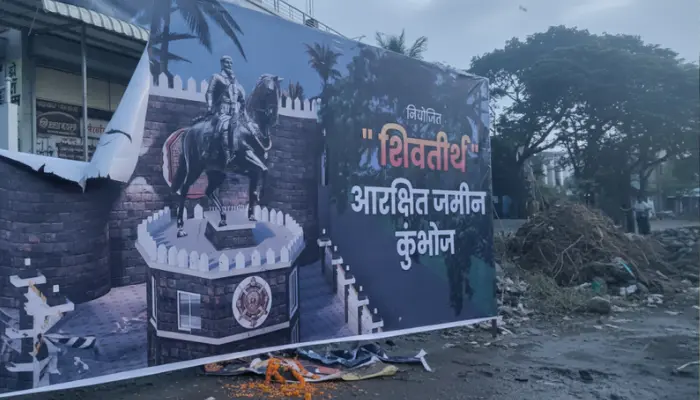
Case Summary
In Kolhapur, Maharashtra, a banner depicting the revered Hindu Chhatrapati Shivaji Maharaj, king of the Maratha empire, was desecrated by two Muslim men. According to media reports, the Muslim perpetrators were identified as Mohammad Imam and Zakir. The duo tore the banner and discarded it. This sparked widespread outrage across the region. Following this, local Hindu organisations, including the Sakal Hindu Samaj, described the act as an affront to the Hindu community's sentiments and called on the state government to enact stringent laws to curb repeated insults to Hindu historical and social figures, particularly Chhatrapati Shivaji Maharaj. Sakal Hindu Samaj, on their official X account on 27 December 2025, wrote, “Such repeated acts hurt Hindu sentiments and have the potential to disturb communal harmony.”
Why it is Hate Crime ?
The primary category selected in this case is- Attack on Hindu religious representations. The secondary category selected is- Desecration of Hindu religious symbols. Icons and symbols or a religious representation of a spiritual ideal are widely revered in Hinduism. Iconography is of vital significance in the Hindu milieu. It helps connect people’s spiritual beliefs with the real world. Iconography within the Hindu faith takes several shapes and forms. Murtis are of most significance to Hindus, to which daily rituals, prayers and offerings are done. Besides the murtis, there are several other symbols which have deep significance in the Hindu faith – the Om and Swastika for example. Since these Hindu religious symbols hold paramount importance in Hinduism, any desecration of symbols, icons, murtis, religious representations and manifestations, is driven by animosity towards the faith itself which manifests itself through these murtis, icons and symbols. Therefore, any desecration of these Hindu religious symbols and representations is considered religiously motivated hate crimes under this category. This case stands as a clear instance of a religiously motivated crime, as a banner of the revered Hindu king, Chhatrapati Shivaji Maharaj, was deliberately desecrated by Muslim men. It is first important to note that Chhatrapati Shivaji Maharaj holds immense importance in Hindu history as the founder of the Maratha empire, a visionary warrior king who resisted Mughal oppression and Islamic invaders in the 17th century. Hindus revere him as a protector of Hinduism and the Hindu community, crediting him with establishing Hindavi Swarajya, a sovereign Hindu kingdom, through daring guerrilla tactics and unyielding defence of temples, cows, and Hindu honour against relentless Islamic imperialist campaigns. The act of desecrating his revered banner in Kolhapur stands as a deliberate assault on the collective sentiments of the Hindu community, far beyond mere vandalism. This act by Muslim perpetrators Mohammad Imam and Zakir constitutes a religiously motivated hate crime, targeting a sacred symbol of Hindu resistance and pride. Shivaji Maharaj embodies the triumph of Sanatan Dharma (Hinduism) over Islamic conquests, making any attack on his banner a calculated provocation rooted in deep-seated animosity towards Hinduism. The deliberate tearing and discarding of the banner echoes historical patterns of iconoclasm, where Muslims desecrate Hindu idols and icons to humiliate and subjugate the Hindu community, marking it as a religiously motivated crime. Such incidents amount to the desecration of a revered symbol representing not just a king, but the enduring spirit of Hindu self-defence. By attacking Shivaji Maharaj's banner, the perpetrators aim to demoralise Hindus, inflame tensions, and assert religious dominance, mirroring crimes against Hindus and their revered symbols rooted in anti-Hindu animosity. Since this case meets the parameters of a religiously motivated offence, it is added to the hate crime database of the Hinduphobia Tracker. Disclaimer: The Hinduphobia Tracker records the dates of incidents based on when the crime occurs rather than when it is reported by the media. However, in this particular case, media reports did not specify the exact date when the desecration occurred. The earliest date when it came to public limelight was 27 December 2025, when Sakal Hindu Samaj, a Hindu organisation, posted about it on their social media handle. Henceforth, this date is selected as the indicative date of the incident. This is recorded for documentation purposes only.


Case Status
Unknown


Perpetrators Details
Perpetrators
Muslim Extremists
Perpetrators Range
From 2 To 5
Perpetrators Gender
male
 Sources




