Tilak erased, Hindus assaulted: Police officer leads brutal attack on activists stopping Muslim entry into Garba
 Navsari, Gujarat, India
  22 September, 2025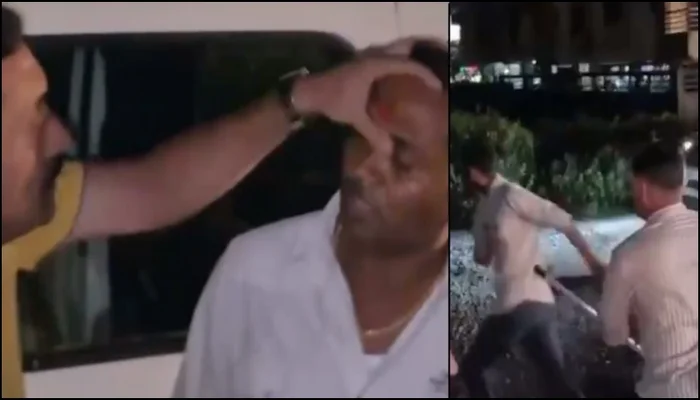
Case Summary
In Navsari, Gujarat, District Deputy Superintendent of Police (DySP) Sanjay K. Rai publicly humiliated and assaulted Hindu activists by erasing the tilak of a Hindu man and physically beating him. Under his leadership, police officers also verbally abused and brutally thrashed other members of Hindu organisations. The incident took place on 23 September 2025, during Navratri celebrations. A day earlier, Hindu organisations including Vishwa Hindu Parishad and Bajrang Dal had launched a campaign to prevent non-Hindus from entering Garba venues, since Garba is a religious event dedicated to Goddess Durga. On receiving information that Muslim youth were being allowed at the ‘Sai Garba’ on Jamalpore Road, Bajrang Dal coordinator Lokesh Soni and others spoke to organisers, who agreed not to allow non-Hindu participants. After this, the activists left the venue peacefully. While they were leaving, DySP Sanjay K. Rai arrived with 4–5 police vehicles and launched a violent assault on the activists without provocation. Officers in civilian clothes joined in the attack. Lokesh Soni reported that Rai beat him with sticks, hurled abuses, and shouted, “This saffron is going to be stuffed in your ass.” The activists were chased, punched, and kicked. Videos shared on social media further showed Rai erasing a Hindu activist’s tilak and dragging him by the hair. No FIR was filed, and CCTV footage from the site was reportedly deleted. Lokesh Soni sustained injuries requiring hospital treatment. Another office bearer, Jayesh Purohit, said activists were paraded for 500–700 metres and beaten as though they were criminals. On 26 September, a petition was submitted to the Navsari Town Police Station demanding strict action against Rai, but no steps were taken. In response, a large rally was held on 29 September, with members of the Hindu community gathering at the Collector’s office to demand an impartial probe and removal of officers like Rai from duty during religious events to ensure peace and security.
Why it is Hate Crime ?
This case has been added to the tracker under the primary category of: - Attack not resulting in death. Within it, the sub-category selected is - Attacked for Hindu identity. In several cases, Hindus are attacked merely for their Hindu identity without any perceived provocation. A classic example of this category of religiously motivated hate crime is a murder in 2016. 7 ISIS terrorists were convicted for shooting a school principal in Kanpur because they got ‘triggered’ seeing the Kalava on his wrist and tilak that he had put. In this, the Hindu victim had offered no provocation except for his Hindu religious identity. The motivation for the murder was purely religious, driven by religious supremacy. Such cases where Hindus are targeted merely for their religious identity would be documented as a hate crime under this category. This case has been added to the tracker because in Navsari city of Gujarat, the tilak of a Hindu activist was deliberately erased by District Deputy Superintendent of Police Sanjay K. Rai while physically assaulting him. The act was not only an instance of brutality but a symbolic attack on the religious identity of Hindus. Simultaneously, Hindu activists were also verbally abused and brutally beaten by the police under his leadership. The tilak is not merely a decorative mark; it holds profound spiritual and cultural significance for Hindus. It represents religious identity, devotion, and affirmation of faith, often worn during prayers, rituals, and as a daily symbol of belief. By forcibly erasing it, the police officer committed a symbolic attack on the religious identity of the individual, demonstrating hostility toward Hindu practices. If there had been any actual violation of the law by the Hindu activists, the police could have registered a case or taken legal action. Instead, by directly targeting and erasing a religious symbol, the officer turned the situation into one of religious hostility. This deliberate act of humiliation made the assault a direct attack on Hindu identity, constituting a targeted hate crime against the community. Furthermore, garba is not merely a cultural gathering, but a religious and devotional event dedicated to Goddess Durga, making it an integral part of Hindu religious practice, particularly in Gujarat. Restricting participation to Hindus is therefore justified, as the event is meant to preserve the sanctity of Hindu worship and community devotion. Those who do not believe in Hinduism, or who show disdain toward its practices, should not participate in religious events meant for the Hindu community. On the day of the incident, the demands of the Hindu organisations were reasonable and were enforced through dialogue rather than force. The organisers of the event agreed to their request, meaning the activists were simply performing their duty to safeguard the religious sanctity of the Garba event according to their faith. However, without provocation, the police reacted violently and began verbally abusing and physically assaulting the Hindu activists. No FIR was registered, yet the activists were beaten as if they were criminals. This act of intimidation directly targeted the Hindu community and sought to restrict them from practising and celebrating their religion freely in public spaces. By using violence to suppress the enforcement of religious norms, the police infringed upon the constitutional right of Hindus to freely practise their faith, thereby restricting their fundamental rights. Such actions not only violate the freedom of religion but also send a broader message of exclusion and intolerance to society, contributing to the marginalisation of Hindus and suppression of Hindu identity in public life. The actions of the police in this incident were thus not isolated or accidental but a deliberate attack on the Hindu community and their right to practise their faith. Though the exact reason for assaulting the Hindu activists is not known, the fact that the officer deliberately removed the tilak of a Hindu man turns the act into a symbolic attack on Hindu religious identity. By verbally abusing, physically assaulting, and erasing this sacred religious mark, the police demonstrated religious hostility rather than enforcement of the law. This assault on a core religious symbol sought to intimidate the Hindu community and restrict outward displays of Hindu identity. Such acts constitute a clear hate crime, undermining the constitutional and fundamental rights of Hindus and sending a dangerous message of exclusion, discrimination and intolerance..


Case Status
Complaint filed


Perpetrators Details
Perpetrators
State and Establishment
Perpetrators Range
Unknown
Perpetrators Gender
unknown
 Sources




