Hindu residents, including children, lured for Christian conversion under the guise of exorcism and healing
 Bharatpur, Rajasthan, India
  27 September, 2025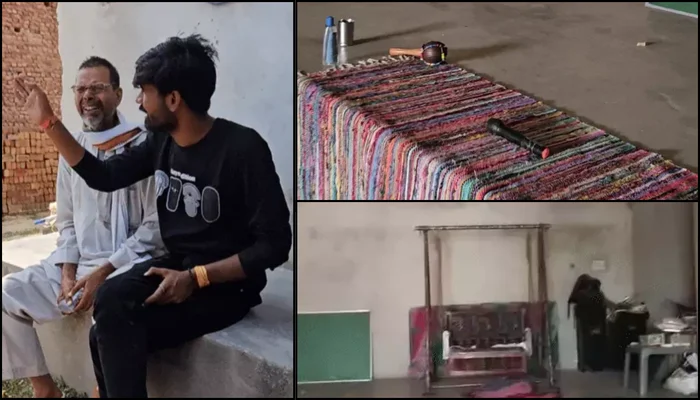
Case Summary
In the Kanjauli Line area of Bharatpur, Rajasthan, Hindu residents, including women, children, and senior citizens, were targeted for conversion by Christian missionaries under the guise of a prayer meeting. The missionaries claimed to cure illness and performed flimsy exorcisms to brainwash people towards conversion. According to reports, a Christian prayer meeting was organised every Sunday at a house near Kanjauli Line, where Hindus were lured and brainwashed for religious conversion. The house belonged to a Christian man named Virendra, and the prayers were led by his son, David. When Bajrang Dal, a Hindu organisation, received information about the prayer meeting and illegal conversion activities, they arrived at the site along with the police. It was found that nearly 150 people were present at the prayer meeting, including women, children, and elderly individuals. The missionaries were converting people by claiming that they could cure illnesses and heal diseases. They performed fake exorcisms and healing rituals to push people towards conversion. Religious books, symbols, and water were also found inside the house. Upon the arrival of Hindu activists and the police, the organisers of the prayer meeting fled through a back exit. Police detained a man and a woman for questioning. As of the date of writing this report, the investigation was ongoing. It is important to highlight that some people who attended the meeting claimed that they were there of their own free will.
Why it is Hate Crime ?
This case has been added to the tracker under the primary category- Predatory Proselytisation. Within this, the subcategory selected is- Conversion/ attempts to convert by inducement. Predatory Proselytisation is not just limited to threat, harassment, force and violence, but it also has contours of stealth. In several cases, the Hindu victim is exploited to convert, with non-Hindus taking advantage of their poverty. In such cases, the Hindu victim who is suffering financially is offered monetary benefits, including lucrative offers for jobs, health treatment, education, etc, to induce the victim into changing his/her religion. In such cases, the religious identity of the victim and the aim to disenfranchise him from his faith form the heart of the crime. Also, taking advantage of and exploiting an individual’s economic vulnerabilities is widely acknowledged as exploitation, forms of which are often penalised by law. Such cases therefore are considered religiously motivated hate crimes since the victim’s religious identity forms the very heart of the crime itself. The other subcategory selected is- Proselytisation by grooming, brainwashing, manipulation or subtle indoctrination, with tertiary category being - Pattern of targeting Hindus and Conversion of minor. Religious brainwashing essentially means the often subtle and forcible indoctrination to induce someone to give up their religious beliefs to accept contrasting regimented ideas. Religious grooming or brainwashing also involves propaganda and manipulation. It involves the systematic effort, driven by religious malice and indoctrination, to persuade “non-believers’ to accept allegiance, command, or doctrine to and of a contrasting faith. Cases of such grooming or brainwashing are far more nuanced than direct threats, coercion, inducement and violence. In such cases, it is often seen that there is repeated, subtle and continual manipulation of the victim to induce disaffection towards their own faith and acceptance of the contrasting faith of the perpetrator. While subtle indoctrination is widely acknowledged as predatory, an element which is often understated in such conversions or the attempts of such conversion is the role of loyalty and trust which might develop between the perpetrator and the victim. Fiduciary relationships are often abused to affect such religious conversion. For example, an educator transmitting religious doctrine of a competing faith to a Hindu student. The Hindu student is likely to accept what the teacher is transmitting owing to existence of the fiduciary relationship. The exploitation of the fiduciary relationship to religiously indoctrinate victims would also be included in this category. Since the underlying animosity towards the victim’s faith forms the basis of predatory proselytization, such cases are considered religiously motivated hate crimes. This case has been added to the tracker because Hindu residents, including women, children and senior citizens, were targeted for conversion by Christian missionaries under the guise of a prayer meeting. Missionaries claimed to cure illness and performed flimsy exorcisms to brainwash people towards conversion. Offering inducements, promising cures, or performing exorcisms, particularly when directed at vulnerable individuals, shows that these actions were not acts of kindness or charity. Instead, they were calculated moves to exploit Hindus because of their religion. By providing false hope, performing flimsy exorcisms, and claiming to heal illnesses in exchange for conversion, the accused were effectively manipulating individuals who were desperate for assistance. Such tactics are seen in multiple cases where members of Christian missionary groups target socially and economically vulnerable Hindus to further their agenda of religious conversions. This form of coercion strips people of their agency and dignity and results in conversions under duress. These incidents are not random or isolated but are rooted in religious hostility toward Hindu victims. Hindus were lured to the prayer meeting with promises of healing and relief from personal troubles. Prayer, often seen as a sacred and private act amongst Hindus, was misused here as bait for conversion rather than for genuine spiritual upliftment. The participants were not invited to share in faith, but rather to be coerced into abandoning the religious beliefs that defined their identity and cultural heritage. This was a calculated attempt to strip Hindus of their agency and religious freedom, making it a religiously motivated crime. Reports indicate that the prayer meetings had been occurring regularly, suggesting a premeditated and organised operation rather than a sporadic or isolated occurrence. The repetitive targeting of vulnerable Hindus demonstrates a systematic campaign aimed at religious conversion, making the underlying religious motivation evident. The Christian organisers also attempted to indoctrinate the Hindu attendees by using Christian religious texts and materials. Using the scriptures or literature of one faith to deliberately manipulate members of another, with the clear intent of conversion, represents a direct affront to the Hindu faith. Such actions are designed to violate and undermine the beliefs of Hindu victims and are clear indicators of religious hostility towards Hindus and their religious identity. The use of Christian texts and rituals in a systematic manner demonstrates that this was not a casual act of evangelism but part of an organised effort to coerce conversions. In this case, Hindus were lured with promises of healing and were exposed to Christian religious material to encourage conversion. The nature of the conversion efforts and the wider impact on the Hindu community all indicate a targeted action against Hindus as a collectivity. When individuals or groups focus their efforts on converting members of a particular religion, in this case, Hindus, then it demonstrates a fundamental disregard for the Hindu faith. Conversion, especially when not based on personal conviction but rather on external persuasion or pressure, is not simply about sharing a different belief system. It is an attempt to undermine the values, traditions, and identity of the Hindu community. Additionally, children were also present in the meeting, which means that some victims were minors. Thus, the element of consent and genuine change of conscience was missing ab initio. Minors, due to their young age and lack of maturity, are particularly vulnerable to manipulation and coercion. They may not have the ability to fully understand the implications of converting to another religion, and the Christian perpetrator purposely targeted and exploited this vulnerability of the victim. Since this case exemplifies the use of coercion and manipulation to achieve religious conversion, it is a blatant act of religious hate, which is why it has been documented here in the hate tracker. The Christian faith, by its very theological foundations, places a strong emphasis on proselytisation. In pursuit of conversion objectives, Christian evangelists often employ unethical means, ranging from psychological pressure and misinformation to inducements or offering healing. These tactics are designed not as acts of charity but as tools to engineer religious change under the guise of social upliftment, particularly among vulnerable and underprivileged communities. Such acts were deeply rooted in religious animosity towards Hindu victims, and thus, this case was added to the tracker. It is important to understand here that some attendees claimed that they participated of their own free will. However, this does not change the fact that illegal conversions were taking place. Hindus were deliberately lured and converted through promises of healing and manipulative practices. Since the accused were converting people by claiming to heal them, the victims were effectively brainwashed over time into conversion. In many cases, the line between forced conversion and manipulated conversion is so blurred that the victims themselves may not fully understand that they were converted by design rather than by genuine choice. This deliberate targeting of Hindus for conversion constitutes a religiously motivated hate crime.
Victim Details
Total Victim
150
Deceased
0
Gender
- Male 0
- Female 0
- Third Gender 0
- Unknown 150
Caste
- SC/ST 0
- OBC 0
- General 0
- Unknown 150
Age Group
- Minor 0
- Adult 0
- Senior Citizen 0
- Unknown 150


Case Status
Complaint filed


Perpetrators Details
Perpetrators
Christian Extremists
Perpetrators Range
From 2 To 5
Perpetrators Gender
male
 Sources




