Muslim mob assaults and threatens to kill UP businessman for playing Hanuman Chalisa in his house, hurl pieces of meat
 Banda, Uttar Pradesh, India
  30 March, 2023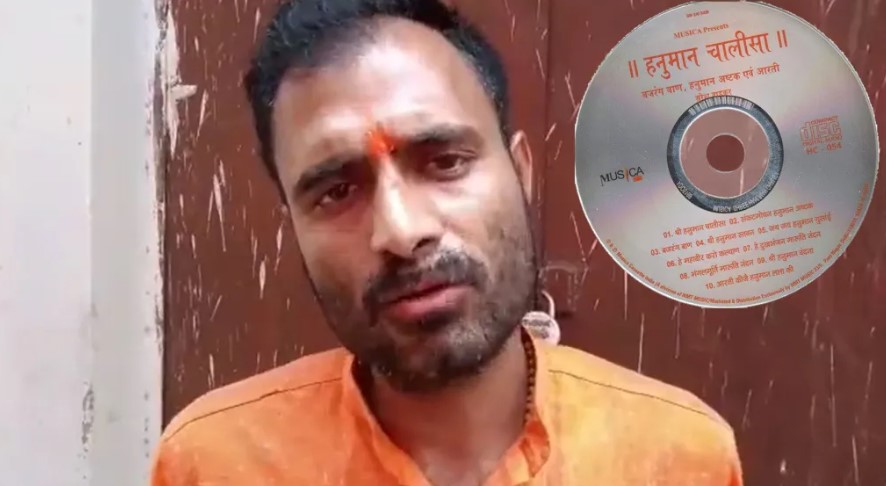
Case Summary
On March 31, 2023, a Hindu businessman named Siddhant Tiwari of Banda, Uttar Pradesh received death threats and pieces of meat were thrown at his house after he played Hanuman Chalisa on his house's music system. Police registered a case against two accused named Toufiq and Sanu, who went absconding after the incident. In his complaint, the victim said that a group of 15 to 20 Muslims arrived at his house when he played Hanuman Chalisa in his home-built godown. They began vandalising the house, smashed the sound system and hurled pieces of meat. As the attackers were leaving, they threatened to cut him into pieces if he dared to play it again.
Why it is Hate Crime ?
This case has been classified as a religiously motivated hate crime under two prime categories of the hate tracker. The first is- Attack not resulting in death. The sub-category selected under this is- Attack against Hindu devotees- Hindu devotees are a few of the easiest targets of religiously motivated hate crimes because during the festival/procession/puja etc, for non-Hindus it is easy to profile their victims on the basis of religion. Hindu devotees come under attack on several occasions by individual non-Hindus or mobs of non-Hindus owing to their animosity against Hinduism, its symbols and tradition/practices. There are several instances of Hindu devotees being attacked while they worship in temples or temporary religious structures, during religious processions, doing bhajan/kirtan/puja in their own homes, in the residential society etc. These attacks are perpetrated by non-Hindus primarily because of their animosity towards Hindus and their faith. In some cases, the trigger for the violence may be non-religious, however, there are two elements that make these hate crimes. First, the Hindus who come under attack are attacked violently while indulging in religious activity. Whether they are in a place of worship or not is immaterial to the crime. When individuals are attacked while indulging in religious practices, the attack in itself is a hindrance to their freedom to practice religion and therefore constitutes a hate crime. Secondly, religious supremacist doctrines and ideologies deem religious practices of Hindus to be offensive ab initio since they are considered “sinful” by these ideologies, worthy to be annihilated by force or coercion. Driven by these religious supremacist ideologies and doctrines, the attacks against Hindu devotees stem from intrinsic animosity towards Hinduism. In some cases, the trigger for the violence may be non-religious, however, it develops into a religiously motivated crime during the course of the violence. Since these attacks stem from animosity towards Hindus and Hinduism, they are considered religiously motivated hate crimes under this category. The second category under which this case has been placed is- Hate speech against Hindus. Under this, the sub-category selected is- Violent threats- Violent threats, explicit, implicit or implied, is the most dangerous form of hate speech since it goes beyond discriminatory and prejudicial language to express the intent of causing harm to an individual or a group of people based on their religious identity and faith. There could be several different kinds of threats that are issued to Hindus based on religious animosity. An explicit threat would mean the direct threat of violence towards an individual Hindu, a group of Hindus or Hindus at large. Physical violence, death threats, threats of destruction of property belonging to Hindus and threats of genocide would mean explicit threats against Hindus for their religious identity. Implicit threats may not be a direct threat but implied through the use of symbols of actions – for example – in the Nupur Sharma case, other than explicit threats, there were also implicit threats when Islamists took to the streets to burn and beat her effigies. It implies that they want to do the same to Nupur Sharma – thereby is considered an implicit threat. Violent threats can be delivered in person, through letters, phone calls, graffiti, or increasingly through social media and other online platforms. It would be important to understand that a threat – explicit or implicit, online or offline – to an individual who happens to be a Hindu does not qualify as a religiously motivated threat. Such a threat, while vile and dangerous, could be owing to non-religious reasons and/or personal animosity. To qualify as a religiously motivated threat, it would need to exhibit an indication that the individual is being targeted for religious reasons and/or owing to his/her religious identity as a Hindu. Here, the Muslim accused targeted the Hindu devotee, Siddhant Tiwari, for playing the Hanuman Chalisa, a devotional hymn dedicated to Lord Hanuman, one of the most revered deities in Hinduism. The group of attackers not only vandalized his property but also mocked his religious beliefs by throwing pieces of meat, an act that is especially offensive to many Hindus due to the significance of vegetarianism in Hindu culture. Furthermore, the violent threats to "cut him into pieces" if he played the Hanuman Chalisa again demonstrate an intent to instil fear and suppress the public expression of his faith. Notably, there was no instigation or confrontation initiated by the victim, who was merely practising his faith by playing the Hanuman Chalisa in his home. The deliberate act of vandalism, hurling of meat, and issuing of violent threats reveals the attackers' intent to not only insult Hindu beliefs but also terrorize the victim for expressing his religious identity. This unprovoked assault highlights the deep-rooted hatred toward Hinduism, making it a clear instance of religiously motivated violence.
Victim Details
Total Victim
1
Deceased
0
Gender
- Male 1
- Female 0
- Third Gender 0
- Unknown 0
Caste
- SC/ST 0
- OBC 0
- General 0
- Unknown 1
Age Group
- Minor 0
- Adult 1
- Senior Citizen 0
- Unknown 0


Case Status
Case sub-judice


Perpetrators Details
Perpetrators
Muslim Extremists
Perpetrators Range
From 10 to 100
Perpetrators Gender
male
 Sources




