Targeted attacks on Hindus in Bangladesh whitewashed by Bangladeshi media outlet on social media
 Bangladesh
  10 August, 2024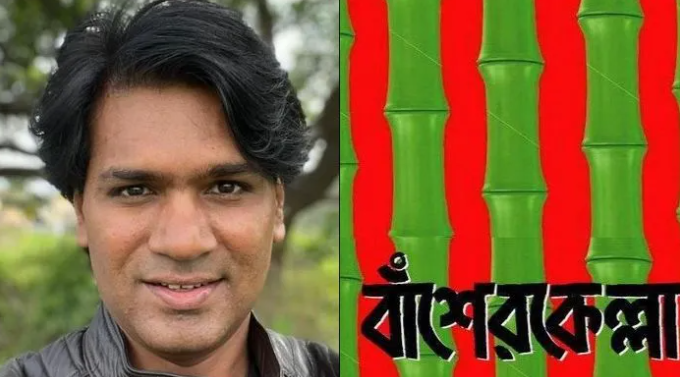
Case Summary
Amidst attacks on Hindus in Bangladesh, the X (formerly Twitter) handle ‘Basherkella’—a media outlet with over 320,000 followers—actively downplayed and rationalised atrocities committed by Muslim extremists against the minority Hindu community. After the ouster of Prime Minister Sheikh Hasina and in the subsequent surge of violence against Hindus, Basherkella emerged as a primary source for radical Muslims in the region. The accused account has close links with the Bangladesh Nationalist Party and Jamaat-e-Islami, a radical Muslim group. Basherkella consistently defended Muslim extremists involved in anti-Hindu violence and repeatedly published misleading content to deny the targeting of Hindus, even sharing a video by Akash Banerjee, a leftist anti-Hindu YouTuber, on 11th August 2024 to falsely assert that Hindus were not under attack, despite unmistakable evidence from several credible sources. Basherkella went further by disseminating unfounded accusations that Hindus, along with members of the Awami League, were attacking Bangladesh's armed forces. The account also revived the ‘Bhagwa Love Trap’ conspiracy, which irrationally alleges that Hindu men systematically target Muslim women for conversion, despite offering no evidence or factual data for such claims. These fabrications directly incited violence against individual Hindu officers such as Debdas Bhattacharya. Throughout successive incidents of anti-Hindu violence, Basherkella’s role has extended to inciting attacks and dehumanising Bengali Hindus, resorting to communal slurs such as ‘malaun’—a term of abuse directed at Hindus—and overtly calling for their murder. The account boasted that “we will kill all the Malauns and Bangladesh will be ‘Banglastan’ like Pakistan.” Basherkella also posted threats about uniting with Pakistan to form an Islamic state where only Muslims would remain, furthering direct and unambiguous Hinduphobic hate speech. During the brutal Muslim extremist attacks on Hindus in October 2021, Basherkella openly engaged in victim-blaming, spreading falsehoods that Hindus themselves had set fire to their own homes to “malign the non-sectarian image of Bangladesh,” before quietly deleting the tweet when exposed. The mouthpiece has been described as a propaganda arm for Jamaat-e-Islami, providing persistent justification and cover for pre-planned anti-Hindu violence. In a notorious episode, Basherkella also dehumanised Hindu women by likening them to animals in disparaging social media posts, intensifying Hinduphobic rhetoric. The accused posted a picture of a smiling dog with a Bindi, a sacred red dot worn by Hindu women on their foreheads, and wrote, “Bindi is their (Hindu) culture and not that of Muslims.” It indicated that ‘bindi’ belonged to Hindu women, who were represented by the picture of a smirking dog. Significantly, anti-Hindu journalist Mohammad Zubair was also observed citing Basherkella, further amplifying the whitewashing of targeted attacks and lending further reach to its communal propaganda. The account’s persistent and targeted dissemination of falsehoods, dehumanisation, and calls for violence have solidified its position as a central source of online anti-Hindu animosity in Bangladesh. Its influence has not only incited attacks but also contributed to the ongoing marginalisation and demonisation of the Hindu minority during a period of acute vulnerability and widespread communal violence.
Why it is Hate Crime ?
This case has been added to the tracker under the primary category- Hate Speech against Hindus. The subcategory selected is- Anti-Hindu subversion and prejudice. The tertiary category selected is- Anti-Hindu fake news or downplaying. Hate speech is defined as any speech, gesture, conduct, writing, or display that is prejudicial against a specific individual and/or group of people, which is leading to or may lead to violence, prejudicial action or hate against that individual and/or group. Media plays a specific and overarching reach in perpetuating prejudicial attitudes towards a community owing to unfair, untrue coverage and/or misrepresentation/misinterpretation, selective coverage and/or omission of facts of/pertaining to issues affecting a specific religious group. This type of bias can dehumanise the victim group, making it easier for others to justify harmful actions against them, which aligns with the objectives of hate speech laws aimed at preventing such harm. It is often observed that the media takes a prejudicial stand against the Hindu community driven by their need to shield the aggressor community which happens to be a numeric minority, however, is the one perpetrating violence against Hindus. For example, the media is often quick to contextualise religiously motivated crimes against Hindus, omit or misrepresent facts that point towards religiously motivated hate crimes, justify and/or downplay religiously motivated hate crimes or simply present fake news to stereotype Hindus. Such media bias leads to the denial of persecution and is often used to dehumanise Hindus, leading to justification for violence against them. For example, the media covered several fake allegations of Hindus targeting Muslims and forcing them to chant Jai Shree Ram. Most of these cases were proved false and fabricated after police investigation. These fake news reports were subsequently never retracted or clarified. Such fake news led to the justification of violence and dehumanisation of Hindus based on the argument that since Hindus targeted Muslims and forced them to chant Jai Shree Ram, the dehumanisation of Hindus and violence against them was par for the course and merely a retaliation. Such media bias leads to prejudicial portrayal of Hindus and offers a justification for violence against them and therefore, is considered hate speech under this category. The other subcategory selected is- Anti-Hindu slurs, mocking faith. Anti-Hindu slurs and the deliberate mocking of the Hindu faith owing to religious animosity involve the usage of derogatory terms, stereotypes, or offensive references to religious practices, symbols, or figures. One of the common anti-Hindu slurs used against Hindus is “cow-worshipper” and “cow piss drinker”. The intention of using this term is to demean and mock Hindus as a group and their religious beliefs since Hindus consider the cow holy. Additionally, some symbols and the slurs attached to them have a historical context that exacerbates the insult, hate, stereotyping, dehumanisation and oppression against Hindus. Cow worship has been used for centuries to denigrate Hindus, insult their faith and oppress Hindus specifically as a religious group. There has been overwhelming documentation about how cow slaughter has been used to persecute Hindus with cow meat being thrown in temples and places of worship. There has also been overwhelming documentation where cow meat (beef) has been force-fed to Hindus to either forcefully convert them to Islam or denigrate their faith. Apart from cow worship, the Swastika – which holds deep religious significance for the Hindus – has also been misinterpreted and distorted to use as a slur against Hindus. Similarly, the worship of the Shivling has been used by supremacist ideologies and religions to denigrate Hindus owing to religious animosity. Such slurs and denigration stem out of inherent animosity and hate towards Hindus and their faith, therefore, it is categorised as hate speech targeted at Hindus specifically owing to their religious identity. The other subcategory selected is- Violent Threats. Violent threats, explicit, implicit or implied, is the most dangerous form of hate speech since it goes beyond discriminatory and prejudicial language to express the intent of causing harm to an individual or a group of people based on their religious identity and faith. There could be several different kinds of threats that are issued to Hindus based on religious animosity. An explicit threat would mean the direct threat of violence towards an individual Hindu, a group of Hindus or Hindus at large. Physical violence, death threats, threats of destruction of property belonging to Hindus and threats of genocide would mean explicit threats against Hindus for their religious identity. Implicit threats may not be a direct threat but implied through the use of symbols of actions – for example – in the Nupur Sharma case, other than explicit threats, there were also implicit threats when Islamists took to the streets to burn and beat her effigies. It implies that they want to do the same to Nupur Sharma – thereby is considered an implicit threat. Violent threats can be delivered in person, through letters, phone calls, graffiti, or increasingly through social media and other online platforms. It would be important to understand that a threat – explicit or implicit, online or offline – to an individual who happens to be a Hindu does not qualify as a religiously motivated threat. Such a threat, while vile and dangerous, could be owing to non-religious reasons and/or personal animosity. To qualify as a religiously motivated threat, it would need to exhibit an indication that the individual is being targeted for religious reasons and/or owing to his/her religious identity as a Hindu. This case constitutes a clear instance of anti-Hindu hate speech primarily because the accused, the X (formerly Twitter) handle ‘Basherkella,’ actively downplayed and whitewashed the communal and religiously motivated targeted attacks against Hindus by Muslim extremists in Bangladesh. Following the political exile of Sheikh Hasina, Hindus in Bangladesh have been systematically hunted, attacked, killed, and subjected to the destruction of their homes and temples. These brutal atrocities are not isolated incidents but part of a widespread campaign of violence and intimidation. However, Basherkella persistently sought to negate and deny the gravity of these attacks, spreading misinformation and obscuring the ongoing persecution of the Hindu minority. This act of erasing and minimising the victims’ suffering amounts to hate speech driven by deep-seated religious prejudice and animosity towards Hindus, effectively whitewashing their targeted genocide and abuse. Furthermore, Basherkella’s long-established history of bigotry underscores its anti-Hindu stance. The outlet has strong ties with the Bangladesh Nationalist Party and Jamaat-e-Islami, both known for their roles in communal violence. Basherkella consistently defends Muslim extremists while maligning the Hindu community. It propagated the falsified ‘Bhagwa Love Trap’ conspiracy theory, falsely alleging that Hindu men systematically target Muslim women for conversion, a narrative that incited violent attacks on Hindu officers such as Devdas Bhattacharya. Repeatedly, Basherkella has dehumanised Bengali Hindus by using slurs like ‘malaun’, a deeply derogatory term highlighting entrenched religious hostility. The account has boastfully declared intentions to “kill all the ‘malauns’” and transform Bangladesh into ‘Banglastan’, akin to Pakistan, where only Muslims would reside. Such rhetoric vividly demonstrates clear religious animosity, reflecting violent threats and hate speech motivated solely by the victims' Hindu identity. In addition, Basherkella’s engagement in victim-blaming is particularly egregious. During the Islamist-led attacks on Hindu homes in October 2021, it spread falsehoods accusing Hindus of setting fire to their own houses to damage Bangladesh’s “non-sectarian image.” This malicious fabrication was deleted only after exposure, revealing a deliberate pattern of absolving Muslim perpetrators while blaming victims. Such acts are motivated by deep-seated animosity and bias against Hindus for their religious identity, making it a religiously motivated crime. Moreover, Basherkella also previously dehumanised Hindu women and disrespected the Hindu faith by publishing a Hinduphobic image of a dog adorned with a ‘bindi’ (red dot), accompanied by taunts asserting that the ‘bindi’ was exclusively Hindu cultural property, not Muslim. Comparing Hindu women to animals and disrespectfully targeting their religious symbols further evidences the deep-seated hatred and religious animosity held by Basherkella against Hindus and their faith. Whitewashing a genocidal campaign against Hindus while simultaneously belittling their religious and cultural identity firmly establishes this case as a blatant act of religiously motivated hate speech and a hate crime against the Hindu community. Contrary to Basherkella's claims, the Hinduphobia Tracker documented several instances of Hindus being targeted for their religious identity in Bangladesh following Sheikh Hasina’s exile. On 5th August 2024, in the Pirojpur district, Hindus were brutally attacked by a Muslim mob. Hindu homes were selectively targeted, attacked, and looted. A Hindu woman was also brutally gang-raped by members of the Muslim mob. In another instance, Jhenaidah saw extensive violence with ongoing attacks, vandalism, and looting at the homes of 10 Hindu families in Chaklapara municipality. Hindu shops in Kotchandpur were also attacked and looted. In Tilpatti, Bargola, 5-7 Hindu shops were attacked, vandalised, and looted. Similarly, the house of Dr Gautam Kumar Mondal in Sahapukur village, Dupchanchia Upazila, was attacked and looted. The house of Sahadev Roy in Sonadia, Hatiya, Noakhali, was attacked and looted. In Thakurgaon, Hindu homes in the Sadar were attacked, vandalised, and looted. Additionally, in ward 2 of Pirganj, the cremation temple was attacked and burnt. In Patuakhali, the Radha Govinda Temple in Kuakata was attacked and vandalised. The house of Ananta Mukherjee was attacked, vandalised, and looted. Hindu homes in wards 2 and 3 of the Sadar, Panchagarh, were attacked, vandalised, and looted. The deliberate targeting of Hindus, as an oppressed minority, and the media’s failure to accurately report this reality is emblematic of anti-Hindu bias—one that dehumanises the victims and obscures the true nature of the genocide the Hindu community endures. This deliberate distortion and minimisation of anti-Hindu violence not only silences the victims but also emboldens Muslim extremists and undermines efforts for justice and protection of Hindus. Given that this case meets the parameters of a hate speech targeting Hindus, it is being added to the hate crime database of the Hinduphobia Tracker. Note: The Hinduphobia Tracker has documented several cases of religious persecution of Hindu minorities in Bangladesh. To read these cases, please visit our official website- hinduphobiatracker.org.


Case Status
Unknown


Perpetrators Details
Perpetrators
Others
Perpetrators Range
Unknown
Perpetrators Gender
unknown
 Sources




