Religious persecution of Hindus in Bangladesh whitewashed and downplayed by Human Rights Watch deputy director for Asia
 India
India  6 August, 2024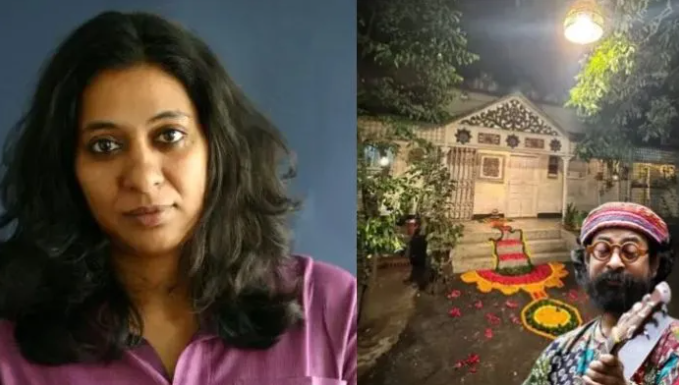
Case Summary
On August 5th 2024, Islamists in Bangladesh attacked Hindu homes, shops, and temples under the guise of protests against the Sheikh Hasina government. Despite Hasina's resignation as Prime Minister, the violence against Hindus persisted. In the midst of this, Meenakshi Ganguly, Deputy Asia Director of Human Rights Watch, downplayed the communal angle of the attacks, stating they were politically motivated due to Hindus' traditional support for Hasina's Awami League party. On August 7th, she tweeted that Hindu minorities, including musician Rahul Ananda, were targeted because of their political affiliations. Rahul Ananda, frontman of the band Joler Gaan, saw his 140-year-old rental home burned down by an Islamist mob. Although Ananda and his family managed to escape unharmed, the house and its history were reduced to ashes. Ganguly’s comments drew criticism for whitewashing the atrocities committed against Hindus by framing the violence as politically driven rather than stemming from religious hatred. The attacks highlighted the ongoing persecution of Hindus in Bangladesh, even as some tried to downplay the violence as mere political retaliation rather than acknowledging the communal nature of the attacks.
Why it is Hate Crime ?
This case has been added to the hate tracker under the prime category- Hate speech against Hindus and within this, the sub-category selected is- Media bias. Under this, one tertiary category namely, 'Anti-Hindu fake news or downplaying', has also been selected. Hate speech is defined as any speech, gesture, conduct, writing, or display that is prejudicial against a specific individual and/or group of people, which is leading to or may lead to violence, prejudicial action or hate against that individual and/or group. Media plays a specific and overarching reach in perpetuating prejudicial attitudes towards a community owing to unfair, untrue coverage and/or misrepresentation/misinterpretation, selective coverage and/or omission of facts of/pertaining to issues affecting a specific religious group. This type of bias can dehumanise the victim group, making it easier for others to justify harmful actions against them, which aligns with the objectives of hate speech laws aimed at preventing such harm. It is often observed that the media takes a prejudicial stand against the Hindu community driven by their need to shield the aggressor community which happens to be a numeric minority, however, is the one perpetrating violence against Hindus. For example, the media is often quick to contextualise religiously motivated crimes against Hindus, omit or misrepresent facts that point towards religiously motivated hate crimes, justify and/or downplay religiously motivated hate crimes or simply present fake news to stereotype Hindus. Such media bias leads to the denial of persecution and is often used to dehumanise Hindus, leading to justification for violence against them. For example, the media covered several fake allegations of Hindus targeting Muslims and forcing them to chant Jai Shree Ram. Most of these cases were proved false and fabricated after police investigation. These fake news reports were subsequently never retracted or clarified. Such fake news led to the justification of violence and dehumanisation of Hindus based on the argument that since Hindus targeted Muslims and forced them to chant Jai Shree Ram, the dehumanisation of Hindus and violence against them was par for the course and merely a retaliation. Such media bias leads to prejudicial portrayal of Hindus and offers a justification for violence against them and therefore, is considered hate speech under this category. The removal of Sheikh Hasina from power in Bangladesh on August 5 escalated the persecution and marginalisation of the Hindu minority in the predominantly Islamic nation, intensifying what can be described as a silent genocide. Since her ouster, Islamists have carried out unchecked atrocities against Hindus, including physical violence, the destruction of temples and religious symbols, and the systematic displacement of Hindus from their ancestral lands. Over 205 attacks on Hindu temples, shops, and businesses have been recorded following Sheikh Hasina's removal as Prime Minister. Many Hindus have been brutally murdered or injured in these assaults. Amidst this violence, Meenakshi Ganguly, Deputy Asia Director of Human Rights Watch, attempted to downplay the attacks on the minority Hindus in the Islamic state. Ganguly framed the violence as primarily political rather than rooted in religious persecution. By attributing the unrest to political tensions surrounding Sheikh Hasina's ouster, Ganguly failed to adequately address the clear pattern of targeted attacks on Hindu temples, businesses, and homes. Over 205 such incidents were reported, yet Ganguly glossed over the religious aspect, instead suggesting that the violence was incidental to broader political unrest. Ganguly's views can be seen as an attempt to shield Islamist groups from accountability, portraying them as victims of political dynamics rather than aggressors in a religiously charged conflict. This narrative serves to deflect attention from the Islamist violence that is being perpetuated in Bangladesh. By minimising or ignoring these atrocities, Ganguly indirectly contributed to the marginalisation and continued persecution of Hindus, normalising the violence against them. This selective silence can be seen as a form of hate speech, further deepening animosity toward Hindus and their faith and this is why this case has been added to the tracker. The other sub-category this case is being added to is 'denial of large scale persecution'. Denial or mocking of genocide/large-scale persecution/ethnic cleansing refers to the act of denying or minimizing the fact of the ethnic cleansing and/or genocide and/or religious persecution of Hindus. This often involves denying the scale, mechanisms, religious intent, or even the occurrence of the ethnic cleansing and/or genocide and/or religious persecution of Hindus. Hate speech of this kind involves the dissemination of falsehoods that deny or distort established historical facts or mock the suffering of Hindus by saying that they deserved the persecution, motivated by Hinduphobia. Denying such atrocities is not only about the denial of facts or rewriting/revising history, but it also delegitimises the religiously motivated persecution of Hindus, the religious hate/motivation/animosity that led to the persecution, and dehumanises Hindus as a religious group. Such denial of ethnic cleansing and/or genocide and/or religious persecution of Hindus not only denies the suffering but also paves the way for future/present atrocities and hate speech, inciting prejudice and violence against Hindus. It also provides a justification for violence by delinking religious animosity from religiously motivated crimes committed against Hindus. Since such denial and/or mocking of genocide/ethnic cleansing/atrocities motivated by religious animosity leads to present and future ramifications of creating more hate speech, violence, dehumanisation and delegitimisation, it would be considered hate speech under this category.


Case Status
Unknown


Perpetrators Details
Perpetrators
Others
Perpetrators Range
One Person
Perpetrators Gender
female
 Sources




