Hindu persecution in Bangladesh downplayed and whitewashed by Indian Leftist and Muslim journalists
 India
India  5 August, 2024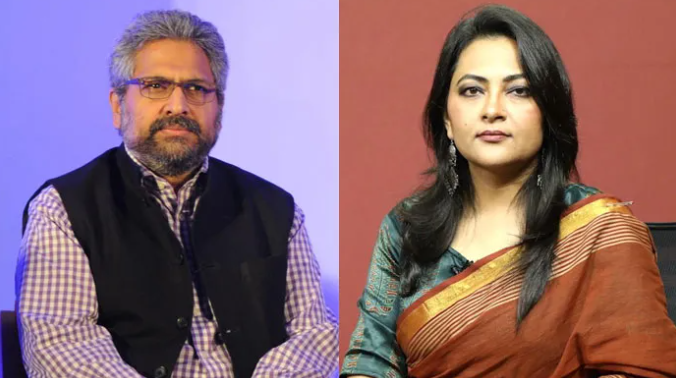
Case Summary
On 5th August 2024, Bangladesh descended into chaos following a coup that ousted Prime Minister Sheikh Hasina, forcing her to flee as an enraged mob approached her residence. In the ensuing turmoil, Muslim extremists exploited the situation to launch violent attacks on the Hindu community, resulting in numerous deaths, rapes, and the destruction of Hindu homes, shops, and temples, many of which were set on fire. Amidst this crisis, The Wire, a leftist and Islamist news portal, founding editor, Siddharth Varadarajan, and journalist Arfa Khanum Sherwani, conducted a live discussion where they downplayed the atrocities faced by Hindus in Bangladesh. Varadarajan dismissed the idea that Hindus were being targeted, despite widespread reports and videos showing Muslim mobs attacking Hindu establishments. Siddharth said, “Right-wing people in India are saying that Bangladesh will now be dominated by Islamic fanaticism. Various speculations and allegations are being made, including concerns about what will happen to the Hindus and Christians in Bangladesh. These are all baseless and foolish claims. The fact is that Sheikh Hasina, although a dictator, was a very secular dictator.” He also refuted claims that the unrest in Bangladesh was supported by Pakistan or China, asserting that various parties were involved and that it was not a foreign conspiracy. During the discussion, Arfa Khanum Sherwani stated that the situation in Bangladesh served as a warning to leaders with dictatorial tendencies. They both argued that similar unrest could occur in India if ''peaceful protests'' are not allowed. Contrary to the claims made by both propagandists, Arfa and Siddharth, Hindus have been facing attacks across Bangladesh in the guise of protests against the government. The Hinduphobia Tracker documented several instances of Hindus being targeted for their religious identity in Bangladesh following Sheikh Hasina’s exile. On 5th August 2024, in the Pirojpur district, Hindus were brutally attacked by a Muslim mob. Hindu homes were selectively targeted, attacked, and looted. A Hindu woman was also brutally gang-raped by members of the Muslim mob. In another instance, Jhenaidah saw extensive violence with ongoing attacks, vandalism, and looting at the homes of 10 Hindu families in Chaklapara municipality. Hindu shops in Kotchandpur were also attacked and looted. In Tilpatti, Bargola, 5-7 Hindu shops were attacked, vandalised, and looted. Similarly, the house of Dr Gautam Kumar Mondal in Sahapukur village, Dupchanchia Upazila, was attacked and looted. The house of Sahadev Roy in Sonadia, Hatiya, Noakhali, was attacked and looted. In Thakurgaon, Hindu homes in the Sadar were attacked, vandalised, and looted. Additionally, in ward 2 of Pirganj, the cremation temple was attacked and burnt. In Patuakhali, the Radha Govinda Temple in Kuakata was attacked and vandalised. The house of Ananta Mukherjee was attacked, vandalised, and looted. Hindu homes in wards 2 and 3 of the Sadar, Panchagarh, were attacked, vandalised, and looted.
Why it is Hate Crime ?
This case is being added under the primary category- Hate Speech against Hindus. Within this, the subcategory selected is- Anti-Hindu subversion and prejudice. The tertiary category selected is- Anti-Hindu fake news or downplaying. Hate speech is defined as any speech, gesture, conduct, writing, or display that is prejudicial against a specific individual and/or group of people, which is leading to or may lead to violence, prejudicial action or hate against that individual and/or group. Media plays a specific and overarching reach in perpetuating prejudicial attitudes towards a community owing to unfair, untrue coverage and/or misrepresentation/misinterpretation, selective coverage and/or omission of facts of/pertaining to issues affecting a specific religious group. This type of bias can dehumanise the victim group, making it easier for others to justify harmful actions against them, which aligns with the objectives of hate speech laws aimed at preventing such harm. It is often observed that the media takes a prejudicial stand against the Hindu community driven by their need to shield the aggressor community which happens to be a numeric minority, however, is the one perpetrating violence against Hindus. For example, the media is often quick to contextualise religiously motivated crimes against Hindus, omit or misrepresent facts that point towards religiously motivated hate crimes, justify and/or downplay religiously motivated hate crimes or simply present fake news to stereotype Hindus. Such media bias leads to the denial of persecution and is often used to dehumanise Hindus, leading to justification for violence against them. For example, the media covered several fake allegations of Hindus targeting Muslims and forcing them to chant Jai Shree Ram. Most of these cases were proved false and fabricated after police investigation. These fake news reports were subsequently never retracted or clarified. Such fake news led to the justification of violence and dehumanisation of Hindus based on the argument that since Hindus targeted Muslims and forced them to chant Jai Shree Ram, the dehumanisation of Hindus and violence against them was par for the course and merely a retaliation. Such media bias leads to prejudicial portrayal of Hindus and offers a justification for violence against them and therefore, is considered hate speech under this category. This is an instance of anti-Hindu hate speech because leading media figures such as Siddharth Varadarajan and Arfa Khanum Sherwani used their platform to dismiss and trivialise the atrocities faced by Hindus in Bangladesh. At a moment when the Hindu community was being attacked, their homes looted, their temples desecrated, and Hindu women subjected to sexual violence, both journalists chose to deny the religious motivation behind the attacks. Instead of acknowledging the persecution, they shifted the discussion to political concerns in India, thereby erasing and invalidating the suffering of Hindus. Firstly, Siddharth Varadarajan completely dismissed the fact that Hindus were being targeted in Bangladesh. While evidence and reports showed Muslim extremist mobs carrying out violence against Hindus specifically for their identity, he brushed this aside and described concerns around the future of Hindus in Bangladesh as “baseless and foolish claims.” By doing so, he not only denied the persecution of Hindus but also insulted those expressing genuine concern for their safety. This dismissive language amounts to hate speech because it trivialises the real suffering of a vulnerable minority and reframes it as propaganda. Secondly, Arfa Khanum Sherwani provided a political diversion in the discussion. Instead of recognising the genocide and persecution of Hindus, she portrayed the events in Bangladesh as a broad warning to governments with authoritarian tendencies, directly hinting at the Modi government in India. This rhetorical shift positioned the Hindu minority of Bangladesh as irrelevant “collateral” in a political lecture about Indian democracy. In effect, she downplayed the pain, loss, and trauma of Hindus, which serves to normalise their persecution and send a message that their suffering does not matter. Such dismissal and reframing showcase a clear hostility towards Hindus. By denying that Hindus were victims of religiously motivated violence and by mocking or undermining those who highlighted the atrocities, the accused reinforced an atmosphere of contempt against Hindus. This emboldens Muslim perpetrators because it assures them that their crimes will either be ignored or rationalised by intellectual and media figures. Contrary to these dismissals, Hinduphobia Tracker recorded multiple documented cases of religious-based persecution of Hindus in Bangladesh following Sheikh Hasina’s exile. Hindu families across districts such as Pirojpur, Jhenaidah, Thakurgaon, and Patuakhali were attacked solely for their religious identity. The attacks—including rapes, arson, and temple desecration—were not political protests but acts of anti-Hindu hatred. To deny or whitewash this constitutes an indirect form of hate speech that silences the Hindu victims and legitimises violence. Therefore, this case is being added to the hate crime database.


Case Status
Unknown


Perpetrators Details
Perpetrators
Others
Perpetrators Range
From 2 To 5
Perpetrators Gender
both
 Sources




