Targeted attacks against Bangladeshi Hindus whitewashed by Indian Muslim 'journalist' on social media
 India
India  4 August, 2024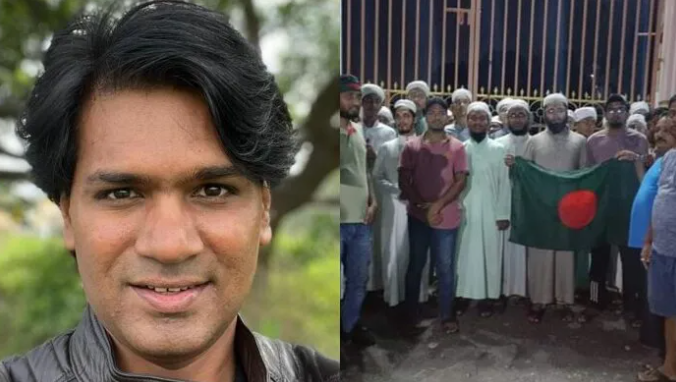
Case Summary
The religious persecution of Bangladeshi Hindus was whitewashed by Mohammed Zubair, co-founder of Alt News and a known anti-Hindu Indian Muslim journalist. Zubair presented a distorted narrative by claiming that Muslims were protecting Hindu temples in Bangladesh amidst ongoing violent attacks committed by Muslim extremists against the Hindu community. On 5th August 2024, following a successful coup that ousted Prime Minister Sheikh Hasina and forced her to flee the country, Bangladesh plunged into chaos. Islamists exploited the ensuing unrest to launch widespread violent attacks on Hindus that included killings, rapes, and the burning and destruction of Hindu homes, shops, and temples. Despite this horrific backdrop, Mohammed Zubair attempted to downplay and distract from these atrocities by sharing images and posts highlighting Muslims forming “human chains” to guard temples, such as the prominent “Dhakeshwari Temple”. He portrayed Muslims as protectors while deliberately ignoring the actual perpetrators responsible for the targeted violence and destruction. Zubair further reinforced his narrative by referencing Basherkella, a Bangladeshi Muslim extremist account known for its longstanding anti-Hindu hate speech, thereby whitewashing ongoing communal atrocities through misleading representation. Moreover, Zubair circulated multiple posts depicting Muslims standing guard outside temples, using these visuals to obscure the brutal killings and sexual violence inflicted on Hindus and the systematic vandalism of their sacred sites by Muslim mobs. He also referenced an alleged appeal from a group called ‘Students Against Discrimination’, urging for “communal harmony” and protection of Hindu minorities and their property. This selective amplification of Muslim “protections” conveniently omitted any acknowledgement that these protective actions often served Muslim-only interests, excluding Hindus themselves. This misrepresentation effectively casts the Muslim perpetrators as benevolent guardians, shielding extremist violence from accountability. Furthermore, this practice mirrored earlier incidents, such as the 2020 episode when a hundred Muslim youths formed a ‘human chain’ to protect a Hanuman temple in Bengaluru from arson attacks by Muslim mobs. Zubair and his associates consistently avoided clarifying the true source of threats against Hindu temples and homes- Muslim mobs. Instead, they continued to portray Muslims as the sole protectors of these sites, suppressing the reality of targeted anti-Hindu violence. In this instance, Zubair sheltered Muslim extremists by citing a known extremist account, Basherkella, that has long disseminated hate against Hindus and demeaned Hindu women using offensive slurs, such as referring to Hindu females as “b*tches”, following attacks on Hindu women by police officials in Dhaka.
Why it is Hate Crime ?
This case has been added to the tracker under the primary category- Hate Speech against Hindus. The subcategory selected is- Anti-subversion and prejudice. The tertiary category selected is- Anti-Hindu fake news or downplaying. Hate speech is defined as any speech, gesture, conduct, writing, or display that is prejudicial against a specific individual and/or group of people, which is leading to or may lead to violence, prejudicial action or hate against that individual and/or group. Media plays a specific and overarching reach in perpetuating prejudicial attitudes towards a community owing to unfair, untrue coverage and/or misrepresentation/misinterpretation, selective coverage and/or omission of facts of/pertaining to issues affecting a specific religious group. This type of bias can dehumanise the victim group, making it easier for others to justify harmful actions against them, which aligns with the objectives of hate speech laws aimed at preventing such harm. It is often observed that the media takes a prejudicial stand against the Hindu community driven by their need to shield the aggressor community which happens to be a numeric minority, however, is the one perpetrating violence against Hindus. For example, the media is often quick to contextualise religiously motivated crimes against Hindus, omit or misrepresent facts that point towards religiously motivated hate crimes, justify and/or downplay religiously motivated hate crimes or simply present fake news to stereotype Hindus. Such media bias leads to the denial of persecution and is often used to dehumanise Hindus, leading to justification for violence against them. For example, the media covered several fake allegations of Hindus targeting Muslims and forcing them to chant Jai Shree Ram. Most of these cases were proved false and fabricated after police investigation. These fake news reports were subsequently never retracted or clarified. Such fake news led to the justification of violence and dehumanisation of Hindus based on the argument that since Hindus targeted Muslims and forced them to chant Jai Shree Ram, the dehumanisation of Hindus and violence against them was par for the course and merely a retaliation. Such media bias leads to prejudicial portrayal of Hindus and offers a justification for violence against them and therefore, is considered hate speech under this category. This case amounts to a clear instance of anti-Hindu hate speech largely due to the actions of Mohammed Zubair, co-founder of Alt News, who knowingly misrepresented the reality of targeted violence against Bangladeshi Hindus. Despite overwhelming evidence that Hindus were being selectively attacked, their homes set ablaze, and their temples desecrated by Muslim extremists following the political exile of Sheikh Hasina, Zubair propagated a distorted narrative. He claimed that Muslims were protecting Hindu temples amidst the ongoing violent assaults. This gross whitewashing of religiously motivated violence deliberately obscures the suffering of Hindus and serves to downplay the severity of anti-Hindu atrocities. Such a distortion not only denies the truth but also perpetuates communal animosity, making it a clear act of hate speech targeting the Hindu community. Furthermore, the propagation that Muslims were protecting Hindu temples during a time when violent attacks were rampant amounts to an intentional diversion to absolve the perpetrators of their crimes. By focusing on images of Muslims forming “human chains” around temples like the “Dhakeshwari Temple”, Zubair obscured the reality that these very temples were under threat from Muslim mobs. His endorsement of content from Basherkella, a Bangladeshi Islamist account infamous for its anti-Hindu propaganda and dehumanisation of Hindus, further evidences his bias. Basherkella has a documented history of spreading hate, including abusive language against Hindu women and incitement to violence. Zubair’s citing of such a toxic source to downplay communal violence exposes his religious animus and ideological partiality against the Hindu community. This is not an isolated incident but part of a pattern wherein Zubair and other like-minded leftists and Muslims have historically sought to whitewash or deflect from anti-Hindu violence. For instance, during the 2020 anti-Hindu riots in Bengaluru, similar narratives emerged portraying Muslims forming human chains to protect Hindu temples, conveniently omitting the fact that these temples were themselves targets of Muslim mobs. By consistently diverting attention away from Hindu suffering and framing Muslim extremists as benevolent protectors, Zubair has repeatedly undermined the reality of anti-Hindu persecution. This pattern of selective representation and deliberate obfuscation constitutes a sustained campaign of religiously motivated hate speech and communal bias against Hindus, thereby intensifying their marginalisation and victimisation. Contrary to the accused's claims, the Hinduphobia Tracker documented several instances of Hindus being targeted for their religious identity in Bangladesh following Sheikh Hasina’s exile. On 5th August 2024, in the Pirojpur district, Hindus were brutally attacked by a Muslim mob. Hindu homes were selectively targeted, attacked, and looted. A Hindu woman was also brutally gang-raped by members of the Muslim mob. In another instance, Jhenaidah saw extensive violence with ongoing attacks, vandalism, and looting at the homes of 10 Hindu families in Chaklapara municipality. Hindu shops in Kotchandpur were also attacked and looted. In Tilpatti, Bargola, 5-7 Hindu shops were attacked, vandalised, and looted. Similarly, the house of Dr Gautam Kumar Mondal in Sahapukur village, Dupchanchia Upazila, was attacked and looted. The house of Sahadev Roy in Sonadia, Hatiya, Noakhali, was attacked and looted. In Thakurgaon, Hindu homes in the Sadar were attacked, vandalised, and looted. Additionally, in ward 2 of Pirganj, the cremation temple was attacked and burnt. In Patuakhali, the Radha Govinda Temple in Kuakata was attacked and vandalised. The house of Ananta Mukherjee was attacked, vandalised, and looted. Hindu homes in wards 2 and 3 of the Sadar, Panchagarh, were attacked, vandalised, and looted. The deliberate targeting of Hindus, as an oppressed minority, and the accused's failure to accurately report this reality is emblematic of anti-Hindu bias—one that dehumanises the victims and obscures the true nature of the genocide the Hindu community endures. This deliberate distortion and minimisation of anti-Hindu violence not only silences the victims but also emboldens Muslim extremists and undermines efforts for justice and protection of Hindus. Given that this case meets the parameters of a hate speech targeting Hindus, it is being added to the hate crime database of the Hinduphobia Tracker. Note: The Hinduphobia Tracker has documented several cases of religious persecution of Hindu minorities in Bangladesh. To read these cases, please visit our official website- hinduphobiatracker.org.


Case Status
Unknown


Perpetrators Details
Perpetrators
Muslim Extremists
Perpetrators Range
One Person
Perpetrators Gender
male
 Sources




