Communal clashes erupt after Muslims enter Shiv Temple in Darbhanga and attempt to dismantle a mic
 Darbhanga, Bihar, India
  16 June, 2024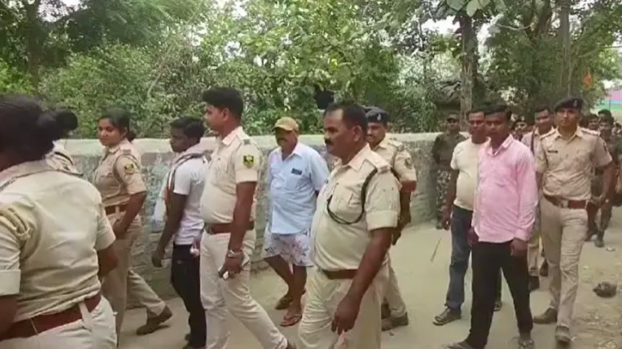
Case Summary
In the Darbhanga district of Bihar, communal tension erupted on Bakrid when a mic testing for Shiv Charcha coincided with Namaz at the Idgah. The incident occurred on June 17, 2024, in Jamalpur area. As the Hindu community tested the mic at a Shiv temple, approximately 50 members of the Muslim community, who were offering Namaz nearby, gathered and attempted to dismantle it, leading to a confrontation. They attempted to unplug the mic although it was already switched off by then. Both sides began throwing each other's belongings. The police promptly intervened, pacifying the situation and deploying additional forces for security. Darbhanga Police Officer Kamya Mishra assured that both parties have been counselled, and strict measures will be taken against the perpetrators.
Why it is Hate Crime ?
This case has been added to the database under two prime categories. The first is- Attack on religious representations and under this, the sub-category selected is- Attack on Temples. In Hinduism, a temple is the abode of the Deity. The Deity in the Temple is consecrated, thereby, making it a real, breathing entity. Hindus believe that not just the Deity but the temple premises itself are sacred to Hindus since Hindus hold the faith that the entire Temple space is an amalgamation of the divine energy of the deity. Given the central significance of Temples in Hindu Dharma, any attack against a Hindu Temple or its peripheral premises is an attack on the faith itself and is born out of animosity towards the faith, of which, the Temple is a central tenet. Any manner of attack against a Temple and/or its premises would therefore be considered a religiously motivated hate crime. The second category under which this case has been placed is- Attack not resulting in death. Within this, the sub-category selected is- Communal clash. Communal clash is a form of collective violence that involves clashes between groups belonging to different religious identities. For a communal clash between Hindus and non-Hindus to qualify as a religiously motivated hate crime, the trigger of the violence itself would have to be anti-Hindu in essence. For example, if there is a Hindu religious procession that comes under attack from a non-Hindu mob and after the initial attack, Hindus retaliate in self-defence, leading to a communal clash between the two religious communities. While at a later stage, both communities are involved in the clash/violence, the initial trigger of the violence was by the non-Hindu mob against the Hindus and therefore, it could safely be termed as an anti-Hindu violence. Further, the trigger would also have to be religiously motivated. In the cited example, the attack by the non-Hindu mob was against religious processions and therefore, can be concluded to be religiously motivated. In some cases, the trigger may be non-religious, however, it develops into religious violence against Hindus at a later stage. In such cases too, the foundational animosity towards Hindus becomes the motivating factor of the crime and therefore, it would be classified as a religiously motivated hate crime against Hindus under this category. Here, it is important to note that the attack on the Hindu devotees was an unprovoked one. The trigger for the attack was the Hindu community testing the mic at a Shiv temple, which coincided with the Muslims reading Namaz at the Idgah nearby. It was the Muslims who entered the temple and indulged in vandalism. Only after the Muslims launched an attack on the Hindus did members of the Hindu community retaliate. Hindus were not the ones to start the violence. Here, it becomes evident that the initial trigger for the attack was religiously motivated as the Muslims barged into a Hindu religious place and vandalised it. The Hindus acted merely in reprisal, leading to a clash. Further, it is pertinent to note here that the Hindus had not demanded that the Muslim devotees stop performing Namaz. In fact, it was the Muslims who had tried to impose their religious considerations on the Hindus by attempting to stop them from using a mic, that too within the Temple premises. Since religious intolerance is the primary purpose behind this incident, this case has been added to the hate tracker.


Case Status
Unknown


Perpetrators Details
Perpetrators
Muslim Extremists
Perpetrators Range
From 10 to 100
Perpetrators Gender
unknown
 Sources




