Dalit couple and family assaulted by Muslims while passing a masjid for 'travelling in car', identity based slurs hurled
 Nuh, Haryana, India
  15 June, 2024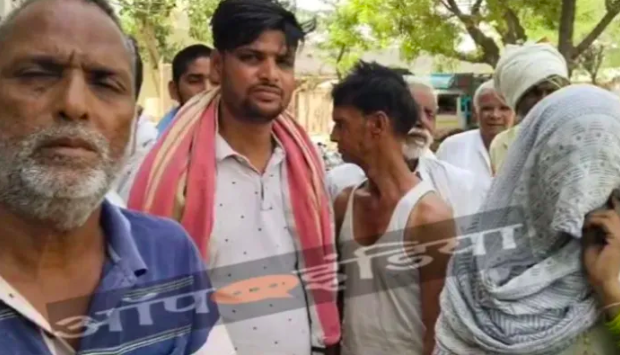
Case Summary
On June 16, in Mewat, Haryana, a Dalit couple was brutally assaulted by Zubair, Ansar, Imtiyaz, Kamil, Jabir, Shakil, and their accomplices in the Bichhor police station area of Nuh. The incident occurred when Archana Sagar and her husband, Parveen Rai, travelled to Archana’s parents' house in Jharokadi village. As they neared the Badi masjid, the assailants stopped their car, assaulted Parveen, and tore Archana’s clothes. The attack escalated when Archana's father and other relatives arrived to help but were also beaten. The number of attackers grew to about 20, and Archana’s brother, who tried to intervene, was also assaulted. During the attack, the perpetrators used casteist slurs, questioning the couple’s audacity to pass in a car. The attackers said, “You Cha**o, how dare you sit in the car and pass in front of us? Cha**o, do whatever you can!” Archana called the police, and the attackers fled upon their arrival. Archana described her village as Muslim-dominated, with Muslims disapproving of Scheduled Caste members travelling by car and pursuing higher education. She said their Dalit identity and her higher education were the reasons behind the assault. Archana, who got married in May 2024, recounted that a minor collision with a Muslim man's bike earlier in the village had triggered an attack before. The couple sustained injuries and are undergoing treatment, with Parveen suffering from depression due to the assault. An FIR was registered against Zubair, Ansar, Imtiyaz, Kamil, Jabir and Shakil based on Archana’s complaint.
Why it is Hate Crime ?
This particular case has been classified as a religiously motivated hate crime under two prime categories of the tracker because of the various distinct components that demonstrate the perpetrator's bias against the Hindu faith. The first is- Attack not resulting in death. Under this, two sub-categories have been selected, the first being- Attacked for Hindu identity. In several cases, Hindus are attacked merely for their Hindu identity without any perceived provocation. A classic example of this category of religiously motivated hate crime is a murder in 2016. 7 ISIS terrorists were convicted for shooting a school principal in Kanpur because they got ‘triggered’ seeing the Kalava on his wrist and tilak that he had put. In this, the Hindu victim had offered no provocation except for his Hindu religious identity. The motivation for the murder was purely religious, driven by religious supremacy. Such cases where Hindus are targeted merely for their religious identity would be documented as a hate crime under this category. The second sub-category selected under the above-mentioned category is- Attacked for crossing 'Muslim area'. One of the reasons that Hindus get attacked unprovoked specifically by Islamists is for crossing ‘Muslim areas’. Essentially, Muslim mobs often attack Hindus crossing or present in certain areas which have a majority Muslim population. It has often been cited as one of the reasons to blame Hindus for attacks against themselves, signalling that Hindus displaying religious symbols, taking our religious processions or crossing any area which is dominated by Muslim residents is a provocation in and of itself. These areas are mostly ghettoized areas where mobs mobilize quickly to attack Hindus for a variety of reasons like playing music during a religious procession, crossing a mosque, wearing a tilak or any other religious symbol in a Muslim-dominated area, praying at a local temple in that area etc. There have been cases where the few local Hindus of that area have been attacked on their way to the Temple for prayers as well, simply because the area is considered a Muslim-dominated area. Several times, it is entirely possible that the immediate trigger for the violence against Hindus was non-religious in nature, however, the violence became religiously motivated in nature because the area was Muslim dominated and the residents on the whole harboured animosity towards Hindus, evidenced from the actions of the mob, the slogans, and the nature of the attack. Such crimes are motivated by the religious identity of the victims and are therefore classified as hate crimes under this category. The second prime category relevant in this case is- Hate speech against Hindus and within this, the sub-category selected is- Anti-Hindu slurs, mocking faith. Anti-Hindu slurs and the deliberate mocking of the Hindu faith owing to religious animosity involve the usage of derogatory terms, stereotypes, or offensive references to religious practices, symbols, or figures. One of the common anti-Hindu slurs used against Hindus is “cow-worshipper” and “cow piss drinker”. The intention of using this term is to demean and mock Hindus as a group and their religious beliefs since Hindus consider the cow holy. Additionally, some symbols and the slurs attached to them have a historical context that exacerbates the insult, hate, stereotyping, dehumanisation and oppression against Hindus. Cow worship has been used for centuries to denigrate Hindus, insult their faith and oppress Hindus specifically as a religious group. There has been overwhelming documentation about how cow slaughter has been used to persecute Hindus with cow meat being thrown in temples and places of worship. There has also been overwhelming documentation where cow meat (beef) has been force-fed to Hindus to either forcefully convert them to Islam or denigrate their faith. Apart from cow worship, the Swastika – which holds deep religious significance for the Hindus – has also been misinterpreted and distorted to use as a slur against Hindus. Similarly, the worship of the Shivling has been used by supremacist ideologies and religions to denigrate Hindus owing to religious animosity. Such slurs and denigration stem out of inherent animosity and hate towards Hindus and their faith, therefore, it is categorised as hate speech targeted at Hindus specifically owing to their religious identity. In this case, the Dalit couple was brutally assaulted primarily due to their Hindu identity. The victim couple confirmed that they were abused with caste slurs by the Muslim youths before being assaulted. Here, it can be argued that a caste-specific slur is aimed at her micro identity of belonging to the Dalit section of the Hindu community and not her Hindu identity itself. However, as far as Abrahamic religions are concerned, the micro identities of caste, region, and language are secondary. It is the religious identity that drives the animosity of the perpetrator against the Hindu victim. In this case, while the Muslim youths hurled caste abuses at the victims, the animosity was driven by his animosity towards Hinduism and Hindus. Further, Archana's recollection of a previous attack, triggered by a minor collision with a Muslim man's bike, reaffirms that the Muslim accused harbored a particular prejudice against Dalits. This incident underscores a persistent animosity towards the couple's Hindu identity. The recurring attacks suggest that the tension wasn't an isolated event, but part of a deeper pattern of prejudice and resentment against Dalits. This further highlights the intersection of religious and caste-based hostility, where the accused targeted Dalits specifically, using any pretext to assert dominance and reinforce social and religious hierarchies. Here it is also important to note, that the fact that the group of Muslims took offence to the Dalit couple merely passing through an area they consider a "Muslim area" reveals a disturbing sense of Islamic supremacy harboured by the attackers. In this case, the perpetrators viewed the predominantly Muslim-occupied region as an exclusive zone where non-Muslims, particularly Hindus were unwelcome. This sense of entitlement and superiority not only reflects deep-seated prejudice but also highlights an attempt to assert religious dominance over public spaces. The assault on the couple was motivated by this supremacist ideology, where Islamists in the area looked down upon Hindus, believing that they had the right to dictate who could move freely through their community. The act of blocking and attacking the couple for simply crossing through this space illustrates a dangerous mindset rooted in exclusion, intolerance and religious animosity, making this case an ideal example for inclusion in a hate tracker.
Victim Details
Total Victim
5
Deceased
0
Gender
- Male 3
- Female 2
- Third Gender 0
- Unknown 0
Caste
- SC/ST 5
- OBC 0
- General 0
- Unknown 0
Age Group
- Minor 0
- Adult 5
- Senior Citizen 0
- Unknown 0


Case Status
Complaint registered


Perpetrators Details
Perpetrators
Muslim Extremists
Perpetrators Range
From 5 to 10
Perpetrators Gender
male
 Sources




