Muslims threaten the lone Dalit family in UP's Kundakala village to convert to Islam or face consequences
 Saharanpur, Uttar Pradesh, India
  27 January, 2024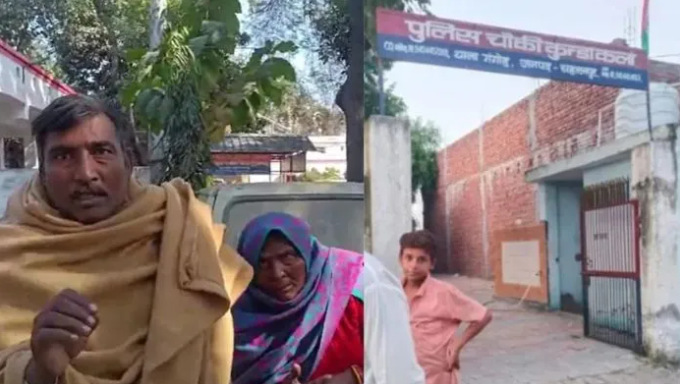
Case Summary
In Saharanpur, Uttar Pradesh, a Dalit family led by Sadhuram faced threats from influential Muslims in their village, demanding conversion to Islam or vacating their land. Sadhuram, of the Valmiki caste, reported that Aslam, Niaz, Ejaz, Sonu, Aamir, Kamil, Salim, and Kala pressured him to leave his land in Kundakala village. Sadhuram, who moved to Kundakala after a flood in Dhalawali village, also accused the group of occupying Panchayat Bhawan land and molesting Hindu women. He filed a complaint with the police, requesting action against the perpetrators.
Why it is Hate Crime ?
To convert a Dalit family to Islam, the Muslim perpetrators in this case used intimidation and threats, including forcing them to leave their home. For this reason, this case falls under the sub-category of "harassment, threats, coercion for conversion" under the main category of "predatory proselytisation." Harassment covers a wide range of behaviours of an offensive nature. It is commonly understood as behaviour that demeans, humiliates, and intimidates a person, including threats and coercion. Harassment and threats, in this case, find their root on discriminatory grounds which has the effect of nullifying a person’s rights or infringing upon his freedom to exercise his right specifically owing to the victim’s religious identity. Verbal and physical threats and psychological or physical harassment are often used against Hindu victims because they choose to practice their professed religion. Religious harassment also includes forced and involuntary conversions by harassment, threats or coercion. Coercion includes intimidatory tactics like force-feeding a Hindu victim beef to convert to another religion, forceful circumcision etc. In several cases documented, non-Hindu perpetrators or those who harbour specific animosity towards Hinduism, harass victims simply based on their religious identity. Such cases often also include harassment to ensure the Hindu victim abandons his/her professed religion and adopts the religion of the perpetrator. In this subcategory, we would only include cases where the victim was harassed, threatened or coerced to convert. Cases where attempts were made to convert but the victim resisted would be documented in another sub-category. Such cases where Hindu victims are harassed to convert to the perpetrator’s religion are rooted in animosity towards the victim’s religious identity and are therefore documented as religiously motivated hate crimes. Harassment covers a wide range of behaviours of an offensive nature. It is commonly understood as behaviour that demeans, humiliates, and intimidates a person, including threats and coercion. Harassment and threats, in this case, find their root on discriminatory grounds which has the effect of nullifying a person’s rights or infringing upon his freedom to exercise his right specifically owing to the victim’s religious identity. Verbal and physical threats and psychological or physical harassment are often used against Hindu victims because they choose to practice their professed religion. Religious harassment also includes forced and involuntary conversions by harassment, threats or coercion. Coercion includes intimidatory tactics like force-feeding a Hindu victim beef to convert to another religion, forceful circumcision etc. In several cases documented, non-Hindu perpetrators or those who harbour specific animosity towards Hinduism, harass victims simply based on their religious identity. Such cases often also include harassment to ensure the Hindu victim abandons his/her professed religion and adopts the religion of the perpetrator. In this subcategory, we would only include cases where the victim was harassed, threatened or coerced to convert. Cases where attempts were made to convert but the victim resisted would be documented in another sub-category. Such cases where Hindu victims are harassed to convert to the perpetrator’s religion are rooted in animosity towards the victim’s religious identity and are therefore documented as religiously motivated hate crimes. Further, the Hindus were threatened to either convert or vacate their land. This makes this case eligible for another category - harassment for conversion leading to exodus. There have been cases where the Hindus living in an area, often with a majority dwelling belonging to non-Hindus or those harbouring animosity towards the Hindu faith, the Hindu residents experience pressure and threats. The pressure, threats or coercion is employed with two aims – the non-Hindu residents of the area want the Hindu residents to either convert their religion to the religion of the dominant residents or leave the area and relocate, so the area could be turned into an exclusive ghetto for adherents of the non-Hindu faith or those who harbour animosity towards the Hindu faith. In several cases, the aim of exodus is explicit. However, in several cases, the demand for exodus of Hindu residents is not explicit, however, harassment by non-Hindu residents leaves the Hindu residents no option but to leave the area, thereby, turning the area into an exclusive ghetto of non-Hindu residents. In such cases, there are instances of harassment or threats to the Hindu residents explicitly. For example, in the Hauz Qazi case of 2019, the Muslim residents claimed that mob violence against the Hindu residents had been triggered by a parking dispute. However, the violence did turn religious with a temple being desecrated and being directed specifically against the Hindu residents. The Hindu residents of the area were clear that the violence was religiously motivated and one of the motives was to affect an exodus of the Hindu residents. In such cases, even though the perpetrators have not explicitly expressed the aim of affecting exodus, the given circumstances and harassment, coupled with prevailing circumstances and precedent point to the intention of exodus and therefore would be categorized under this sub-category. Such crimes are religiously motivated and therefore are hate crimes.


Case Status
Complaint filed


Perpetrators Details
Perpetrators
Muslim Extremists
Perpetrators Range
From 5 to 10
Perpetrators Gender
male
 Sources




