Hindu filmmaker and actors subjected to ISIS-style beheading threats, doxxed by Muslims over film highlighting Muslim women’s struggles
 India
India  22 May, 2024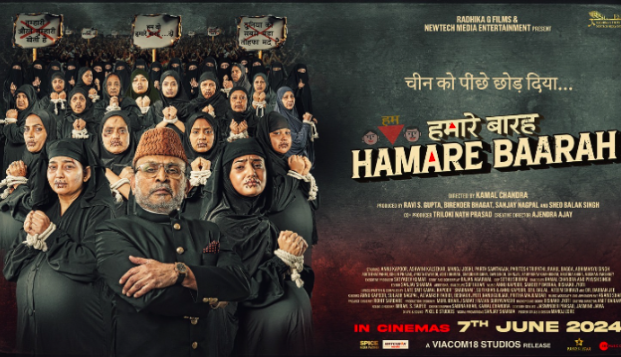
Case Summary
A Hindu film director named Kamal Chandra, along with his actor and producer colleagues, including Annu Kapoor and Aditi Dhiman, received beheading threats from Muslim extremists for making the movie "Hum Do Hamare Barah," which depicted the struggles of Muslim women. According to media reports, the incident occurred upon the release of the film’s teaser, which highlighted how Muslim women endure severe repression, treated as inferior and mere child-bearers within their households under religious pretexts. The film’s release resulted in violent threats against the director and cast from Muslim extremists. Followers of the Muslim extremist Tehreek-e-Labbaik Pakistan, founded by the late Khadim Hussain Rizvi, along with Indian Muslim extremist Mufti Salman Azhari, used social media platforms—particularly Instagram—to issue death threats. They posted graphic ISIS-style beheading videos, accompanied by Islamic hymns and slogans like "Allah hu Akbar," intending to intimidate the filmmakers. The perpetrators manipulated images of the cast and crew in these threatening videos and warned that the director would face the same fate if the film were released. Cyberattacks were also threatened against Zee Music, which had released the movie’s trailer. Further, Muslim extremists linked to the Social Democratic Party of India (SDPI), based in Mumbra, Thane, leaked the film producer’s personal information, including phone numbers, email addresses, and IP details, to facilitate targeted online raids. Reports state that the Tehreek-e-Labbaik Pakistan is a Muslim extremist group that is known for violent protests over perceived blasphemy. It has a documented history of inciting violence and fostering animosity against non-Muslims. Even Mufti Salman Azhari is well known for his inflammatory and extremist anti-Hindu speeches. In one such speech, delivered at a rally in Maharashtra’s Jalna district just days before the inauguration of the Ram Mandir in Ayodhya, he threatened Hindus by stating, “It was a Masjid (referring to Babri Masjid) and it will always remain a Masjid for us. We are facing the heat today, but one day they (Hindus) will face the heat of their decision.” He further declared, “A day will come when people will solely follow Islam and no other religion. We are struggling. Increase our power to such a level that no one will ever be able to trouble us. Aaj kutto ka waqt hai kal hamara ayega (Now these dogs are celebrating, tomorrow we will celebrate),” comparing the Hindu community to dogs.
Why it is Hate Crime ?
The primary category selected in this case is- Hate Speech against Hindus. Within this, the subcategory selected is- Violent threats. Violent threats, explicit, implicit or implied, is the most dangerous form of hate speech since it goes beyond discriminatory and prejudicial language to express the intent of causing harm to an individual or a group of people based on their religious identity and faith. There could be several different kinds of threats that are issued to Hindus based on religious animosity. An explicit threat would mean the direct threat of violence towards an individual Hindu, a group of Hindus or Hindus at large. Physical violence, death threats, threats of destruction of property belonging to Hindus and threats of genocide would mean explicit threats against Hindus for their religious identity. Implicit threats may not be a direct threat but implied through the use of symbols of actions – for example – in the Nupur Sharma case, other than explicit threats, there were also implicit threats when Islamists took to the streets to burn and beat her effigies. It implies that they want to do the same to Nupur Sharma – thereby is considered an implicit threat. Violent threats can be delivered in person, through letters, phone calls, graffiti, or increasingly through social media and other online platforms. It would be important to understand that a threat – explicit or implicit, online or offline – to an individual who happens to be a Hindu does not qualify as a religiously motivated threat. Such a threat, while vile and dangerous, could be owing to non-religious reasons and/or personal animosity. To qualify as a religiously motivated threat, it would need to exhibit an indication that the individual is being targeted for religious reasons and/or owing to his/her religious identity as a Hindu. The other subcategory selected is- Doxxing and harassment of Hindu for religious reasons. Doxxing is the act of making available publicly personal, identifiable information of an individual with the intention of compromising their safety, security and privacy. When doxing is done with religious animosity forming the basis of the intention, it often involves severe consequences like loss of employment, physical harm, physical threat, harassment and/or discrimination for the victim’s religious beliefs. Such doxxing also involves projecting the religious beliefs, affiliations, and rituals of the victim, specifically a Hindu, in a manner that can lead to loss of employment, physical harm, physical threat, harassment and/or discrimination. Apart from doxxing, harassment would also include misrepresentation of an individual's views and religious beliefs that would invite abuse, loss of employment, physical harm, physical threat, harassment and/or discrimination owing to religious hate and animosity. There have been several such instances where religious animosity by one section has led to the doxxing and harassment of Hindus. For example, when a Hindu who worked in the UAE commented on the historical persecution of Hindus at the hands of Muslim invaders, his information was leaked online leading to loss of employment, physical harm, physical threat, harassment and/or discrimination. In another case, a Hindu man’s information was leaked online, leading to violent attacks, after he responded with an emoji to a post about Tipu Sultan, the Islamic tyrant who persecuted Hindus. Such cases are born out of intrinsic religious animosity towards Hindus and therefore, would be considered religiously motivated hate speech. This case was a clear instance of a hate crime against Hindus, as Muslim extremists specifically targeted a Hindu film director, producer, and actors for producing a movie that exposed the struggles of Muslim women. They were subjected to ISIS-style beheading threats, a violent and disproportionate reaction that went far beyond mere disagreement or criticism. Such extreme threats revealed deep-seated religious animosity from Muslim extremists, making it a case of a religiously motivated crime. Even though the grievances could have been addressed through legal channels—such as approaching the courts or filing formal complaints—the Muslim extremists chose to respond with violent threats. They could have made counter-films, written articles, or engaged in peaceful protests. Instead, issuing beheading threats demonstrated a deliberate intent to silence and terrorise the Hindu filmmakers simply for exercising their legal right to create films on sensitive subjects. This behaviour exposed not only gross intolerance but also deep-rooted hostility towards Hindus daring to depict religious or social issues within the Muslim community. Further compounding this animosity was the doxxing campaign by Muslim extremists affiliated with groups like the Social Democratic Party of India (SDPI), who leaked private information of the filmmakers. Such actions endangered the personal safety of the Hindu victims and showed a calculated attempt to inflict harm beyond verbal threats. These actions made the religious animosity behind the crime very evident. Additionally, it is important to note that the Muslim extremist groups and individuals involved have a known history of hostility and violence towards Hindus and non-Muslims. This series of attacks and threats, motivated by religious hostility, made the case an unmistakable act of hate crime targeting the Hindu community. Therefore, this case is being added to the hate crime database of the Hinduphobia Tracker.
Victim Details
Total Victim
4
Deceased
0
Gender
- Male 3
- Female 1
- Third Gender 0
- Unknown 0
Caste
- SC/ST 0
- OBC 0
- General 0
- Unknown 4
Age Group
- Minor 0
- Adult 4
- Senior Citizen 0
- Unknown 0


Case Status
Unknown


Perpetrators Details
Perpetrators
Muslim Extremists
Perpetrators Range
Unknown
Perpetrators Gender
unknown
 Sources




