Anti-Hindu hate speech: Muslim men threaten to behead Hindus and destroy Ram Janmabhoomi temple at Ayodhya
 Vadodara, Gujarat, India
  21 January, 2024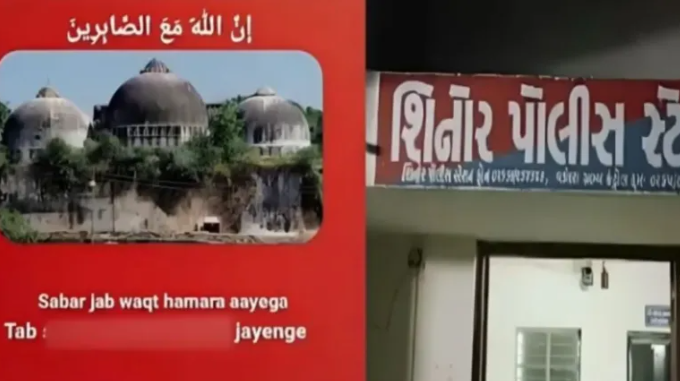
Case Summary
In Sadhli village of Vadodara, Gujarat, violent threats targeting the Ram Janmabhoomi temple in Ayodhya and the Hindu community were issued by three Muslim men: Hamza Khatri alias Hamja, Faizan Nanio, and Junaid Qureshi. According to media reports, the accused posted threatening messages on Instagram regarding the consecration of the Ram temple on 22nd January 2024. They openly threatened to demolish the temple and issued “sar tan se juda” (severing head from body) threats to Hindus, attaching a photograph of the Babri structure. Their message read, “Jab Wakt Hamara Ayega, Tab Sar Dhad Se Alag Kiya Jayega", meaning, “When our time comes, we will cut off your heads from the torso.” The post quickly gained traction on social media. Following this, the Shinor Police Station in Vadodara took note and launched an investigation into the situation. Notably, these threats occurred on the day of Ayodhya Ram Mandir Pran Pratishtha, 22nd January 2024. Ayodhya Ram Janmabhoomi is a site in Uttar Pradesh deeply revered by Hindus as the birthplace of Lord Rama, considered an incarnation of Vishnu and a central figure in the Hindu faith. The temple held immense religious and cultural significance, existing on this sacred land for centuries before being desecrated in 1528. At that time, the Mughal emperor Babur ordered the destruction of the original temple and the construction of Babri Masjid on its ruins, causing generations of dispute and pain within the Hindu community. Hindus endured decades of legal and social hardships, fighting relentlessly in courts for the right to reclaim and restore their holy site. Their struggle ended with the Supreme Court of India’s verdict in 2019, legally restoring the site to the Hindu community and permitting the temple’s consecration.
Why it is Hate Crime ?
This case has been added to the tracker under the primary category- Hate Speech against Hindus. The subcategory selected is- Violent threats. Violent threats, explicit, implicit or implied, is the most dangerous form of hate speech since it goes beyond discriminatory and prejudicial language to express the intent of causing harm to an individual or a group of people based on their religious identity and faith. There could be several different kinds of threats that are issued to Hindus based on religious animosity. An explicit threat would mean the direct threat of violence towards an individual Hindu, a group of Hindus or Hindus at large. Physical violence, death threats, threats of destruction of property belonging to Hindus and threats of genocide would mean explicit threats against Hindus for their religious identity. Implicit threats may not be a direct threat but implied through the use of symbols of actions – for example – in the Nupur Sharma case, other than explicit threats, there were also implicit threats when Islamists took to the streets to burn and beat her effigies. It implies that they want to do the same to Nupur Sharma – thereby is considered an implicit threat. Violent threats can be delivered in person, through letters, phone calls, graffiti, or increasingly through social media and other online platforms. It would be important to understand that a threat – explicit or implicit, online or offline – to an individual who happens to be a Hindu does not qualify as a religiously motivated threat. Such a threat, while vile and dangerous, could be owing to non-religious reasons and/or personal animosity. To qualify as a religiously motivated threat, it would need to exhibit an indication that the individual is being targeted for religious reasons and/or owing to his/her religious identity as a Hindu. In this case, it is first important to state that the Ram Janmabhoomi temple in Ayodhya holds profound religious importance for Hindus, as the site is believed to be the birthplace of Lord Rama, one of the most revered deities in Hinduism and regarded as an ideal of virtue and dharma. A Hindu temple originally existed at this sacred place, serving as a focus of worship for the Hindu community for centuries. In 1528, the Mughal emperor Babur ordered the desecration and demolition of this temple, upon whose ruins a mosque named the Babri Masjid was built. The act of destroying a temple to build a mosque not only symbolised the forced erasure of the religious heritage and identity of Hindus but was a wound that persisted through generations. For Hindus, temples are not merely structures—they are vital sanctuaries for spiritual practice, religious gathering, festival celebration, abode of their deity, and preservation of heritage. The eventual reclamation of the Ram Janmabhoomi site, following an arduous legal and social battle that culminated with the Supreme Court’s historic verdict in 2019, marked the restoration of justice and dignity to generations of Hindus. The accused, being fully aware of the temple’s unique significance—both as a symbol of worship and as an emblem of Hindu resilience and faith—issued threats to destroy it again. Such targeted threats revealed a deep-seated religious animosity, serving as a pointed attack not only on a structure but on the collective dignity and heritage of the Hindu community. Such speech is motivated by immense hatred and animosity towards the Hindu community and its faith, clearly amounting to religiously motivated hate speech. Further, the accused threatened to behead all Hindus by raising slogans of “Sar Tan Se Juda”. By doing this, the accused amplified the level of communal animosity and incitement. This language directly invoked historical patterns of religiously motivated violence, weaponising fear to intimidate the Hindu community. “Gustakh-e-Rasool ki Ek hi saza, sar tan se Juda, sar tan se Juda”, which translates to “There is only one punishment for being disrespectful to Rasool (Prophet Muhammad), their head separated from their torso, their head separated from the torso”, is an Islamist clarion call, that has become a staple feature of violent protests that have so far claimed the lives of at least 6 Hindus, including Kanhaiya Lal in Udaipur and Umesh Kolhe in Amravati, after Muslim fundamentalists, egged on by the dog-whistling of Alt News co-founder Mohammed Zubair against former BJP spokesperson Nupur Sharma, resorted to violence for what they perceived as ‘blasphemy’ against Prophet Muhammad. From Kanpur in India’s northern plains to the southern metropolis of Bengaluru, from Kolkata in the east to Hyderabad in the south, protests in the name of blasphemy have erupted in almost every corner of the country as Islamists took to the streets running amok and shouting “Sar Tan Se Juda” chants over the perceived belief of blasphemy against the Prophet. Though a radical Muslim outfit in Pakistan coined the slogan, it has gained popularity among Islamists in regions beyond its geographical origins. Over the years, we have seen large crowds of Islamists chanting the “Sar Tan Se Juda” slogan, which is nothing but a direct incitement to violence, leading to murders committed in the name of blasphemy. The radicalised outcry is not merely a statement of disapproval; it is a call for the execution of an individual through beheading, based on their religious identity. When this slogan is raised, it sends a clear and terrifying message not just to the individual targeted but also to anyone else who might share similar views or dare to express them. This tactic of intimidation aims to silence dissent and suppress freedom of expression, particularly in religious discourse. It aims to instil fear in the broader community. Islamists use this tactic to settle personal scores with Hindus by levelling fabricated charges of blasphemy against them, which causes outrage and paints a target on them. The underlying hatred and animosity toward non-Muslims, especially Hindus, drive these false blasphemy accusations as a means to subjugate and victimise them. As a result, this case is classified as a religiously motivated hate crime and has been documented accordingly The combination of threats against one of the most sacred temples and calls for violence against Hindus as a whole revealed premeditated religious hatred, deliberately designed to terrorise and destabilise Hindu society. Such speech is not merely hateful commentary but constitutes a direct and deliberate attempt to instil fear, undermine religious coexistence, and target Hindus based on their community identity, making this a grave case of anti-Hindu hate speech. Consequently, this case is being added to the hate crime database of the Hinduphobia Tracker.


Case Status
Complaint filed


Perpetrators Details
Perpetrators
Muslim Extremists
Perpetrators Range
From 2 To 5
Perpetrators Gender
male
 Sources




