Backward Hindu communities, including minors, targeted for Christian conversion; accused offered inducements and denigrated Hindu idols, calling it "stone"
 Nadiad, Gujarat, India
  23 August, 2018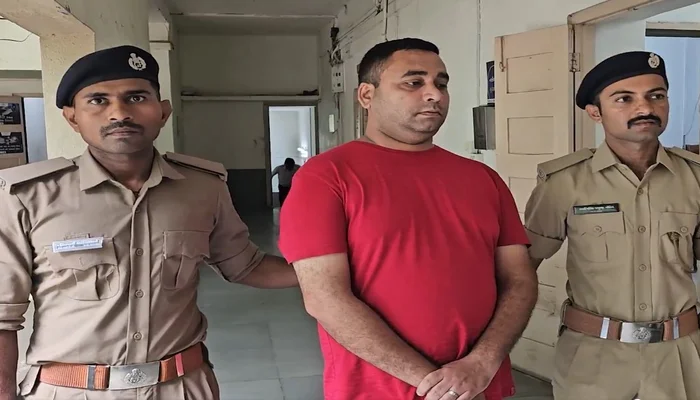
Case Summary
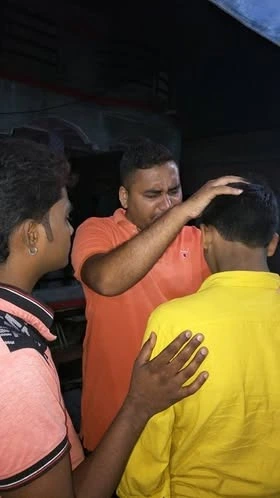
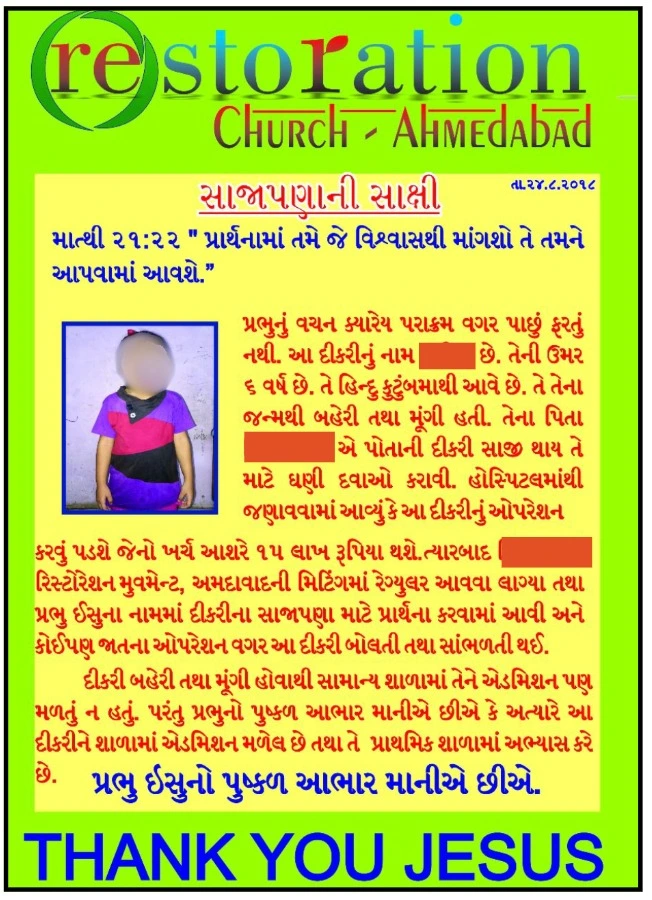
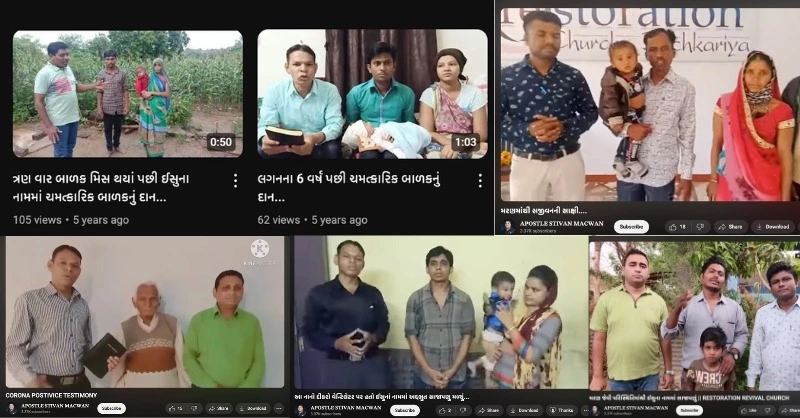
In Nadiad, Gujarat, Dalit and tribal Hindu communities, including minors, were offered inducements and targeted for religious conversion by a Christian man named Steven Macwan. According to reports, the accused was arrested by police while attempting to convert 59 people, including nine minors, during a seminar organised under the banner of his trust, the Restoration and Revival Foundation Trust. The trust was later found to be operating illegally, without proper registration or paperwork, and was being used as a front to convert Hindus. Police investigations revealed that Macwan had been engaged in such illegal conversion activities for over three years and had received substantial foreign funding to facilitate them. His bank account showed transactions totalling approximately ₹1.34 crore during this period, with contributions from both foreign and domestic sources. He primarily targeted Dalit and tribal Hindus from various districts across Gujarat and other states, including Rajasthan, Maharashtra, Odisha, Haryana, Punjab, and Delhi. He lured vulnerable individuals with promises of financial aid and miraculous healing to push them towards conversion. Macwan conducted seminars where he would deliver persuasive speeches using Christian religious literature, claiming that the solution to all problems lay in believing in Jesus. He used emotional appeals and faith-healing performances to brainwash attendees. There were many videos on Steven McEwan's YouTube channel "Apostle Stivan Macwan" in which he claimed to cure someone from illness and bring someone out of other problems through divine miracles. A post on his trust’s Facebook page from 24 August 2018 claimed that Jesus’s prayer had cured a Hindu girl who was unable to hear or speak. Thus, it was revealed that the accused ran conversion activities even before the police anticipated. Police recovered numerous videos, photographs, and digital materials from his devices, many depicting such so-called healing sessions and conversion events, now under forensic examination. Investigations further revealed that Macwan actively propagated anti-Hindu narratives on social media. In one of his speeches, he completely rejected idolatry, using words such as “stone,” and claimed that idol worship was unnecessary. He went on to say that even valuing one’s wife, children, or parents above God or Jesus amounted to idolatry, insisting that Jesus should come before everything else. These statements formed part of his deliberate attempts to denigrate Hindu Such statements were part of his repeated attempts to denigrate Hindu practices and instil disdain for Hindu deities among the audience, many of whom were from marginalised communities. Police confirmed that Macwan’s operations extended beyond Nadiad to cities such as Ahmedabad and Vadodara, and that he had even travelled to Nepal to conduct similar activities. The nine minors found at his seminar during the time of his arrest were rescued and moved to a child protection home. One of the victims, a Scheduled Caste minor girl, had been baptised without her father’s consent, underscoring the coercive and exploitative nature of these conversions. As of the date of writing this report, Steven Macwan was in judicial custody and was booked under the Gujarat Freedom of Religion Act. Police continue to investigate the flow of foreign funds, the operations of his trust, and the wider organised conversion racket.
Case Images

Why it is Hate Crime ?
This case has been added to the tracker under the primary category- Predatory Proselytisation. Within this, the subcategory selected is- Conversion/ attempts to convert by inducement. Predatory Proselytisation is not just limited to threat, harassment, force and violence, but it also has contours of stealth. In several cases, the Hindu victim is exploited to convert, with non-Hindus taking advantage of their poverty. In such cases, the Hindu victim who is suffering financially is offered monetary benefits, including lucrative offers for jobs, health treatment, education, etc, to induce the victim into changing his/her religion. In such cases, the religious identity of the victim and the aim to disenfranchise him from his faith form the heart of the crime. Also, taking advantage of and exploiting an individual’s economic vulnerabilities is widely acknowledged as exploitation, forms of which are often penalised by law. Such cases therefore are considered religiously motivated hate crimes since the victim’s religious identity forms the very heart of the crime itself. The other subcategory selected is- Proselytisation by grooming, brainwashing, manipulation or subtle indoctrination, with the tertiary category being - Pattern of targeting Hindus and Conversion of minor. Religious brainwashing essentially means the often subtle and forcible indoctrination to induce someone to give up their religious beliefs to accept contrasting regimented ideas. Religious grooming or brainwashing also involves propaganda and manipulation. It involves the systematic effort, driven by religious malice and indoctrination, to persuade “non-believers’ to accept allegiance, command, or doctrine to and of a contrasting faith. Cases of such grooming or brainwashing are far more nuanced than direct threats, coercion, inducement and violence. In such cases, it is often seen that there is repeated, subtle and continual manipulation of the victim to induce disaffection towards their own faith and acceptance of the contrasting faith of the perpetrator. While subtle indoctrination is widely acknowledged as predatory, an element which is often understated in such conversions or the attempts of such conversion is the role of loyalty and trust which might develop between the perpetrator and the victim. Fiduciary relationships are often abused to affect such religious conversion. For example, an educator transmitting religious doctrine of a competing faith to a Hindu student. The Hindu student is likely to accept what the teacher is transmitting owing to existence of the fiduciary relationship. The exploitation of the fiduciary relationship to religiously indoctrinate victims would also be included in this category. Since the underlying animosity towards the victim’s faith forms the basis of predatory proselytization, such cases are considered religiously motivated hate crimes. The other subcategory selected is - Attempting to convert/converting by denigrating Hinduism. In several cases, Hindus are converted or an attempt is made to convert Hindus by denigrating their faith, Hinduism. In such cases, the Hindus associate with the non-Hindu perpetrators often by choice and then, the attempt to convert them by insulting their faith, showing the faith down etc begins. An example of this would be a non-Hindu gathering where the Hindus are attending the gathering of their own free will. However, once they attend the gathering, there is an explicit attempt to convert them by abusing their faith and hailing the faith of the perpetrator. The denigration of the Hindu faith is often based on misrepresentation of the Hindu faith, its doctrine and scriptures and insult to espoused traditions if not blatant lies about Hindu beliefs and ways. Such conversions or attempts at conversions are driven by animosity towards the Hindu faith and are therefore documented as religiously motivated hate crimes. The other primary category selected here is - Hate speech against Hindus. Within it, the sub-category selected here is - Anti-Hindu slurs, mocking faith. Anti-Hindu slurs and the deliberate mocking of the Hindu faith owing to religious animosity involve the usage of derogatory terms, stereotypes, or offensive references to religious practices, symbols, or figures. One of the common anti-Hindu slurs used against Hindus is “cow-worshipper” and “cow piss drinker”. The intention of using this term is to demean and mock Hindus as a group and their religious beliefs since Hindus consider the cow holy. Additionally, some symbols and the slurs attached to them have a historical context that exacerbates the insult, hate, stereotyping, dehumanisation and oppression against Hindus. Cow worship has been used for centuries to denigrate Hindus, insult their faith and oppress Hindus specifically as a religious group. There has been overwhelming documentation about how cow slaughter has been used to persecute Hindus with cow meat being thrown in temples and places of worship. There has also been overwhelming documentation where cow meat (beef) has been force-fed to Hindus to either forcefully convert them to Islam or denigrate their faith. Apart from cow worship, the Swastika – which holds deep religious significance for the Hindus – has also been misinterpreted and distorted to use as a slur against Hindus. Similarly, the worship of the Shivling has been used by supremacist ideologies and religions to denigrate Hindus owing to religious animosity. Such slurs and denigration stem out of inherent animosity and hate towards Hindus and their faith, therefore, it is categorised as hate speech targeted at Hindus specifically owing to their religious identity. This case has been added to the tracker because Dalit and tribal Hindu communities, including minors, were offered inducements and targeted for religious conversion by a Christian man named Steven Macwan. Firstly, he lured vulnerable Hindus with promises of financial aid and miraculous healing to push them towards conversion. He offered inducements in an effort to push people towards conversion. Offering inducements, particularly when directed at vulnerable individuals, shows that these actions were not acts of kindness or charity. Instead, they were calculated moves to exploit Hindus because of their religion. By providing inducements in exchange for conversion, the accused was effectively blackmailing those who might have been desperate for assistance or hope. Such instances are seen in many cases where members of Christian missionary groups target socially and economically vulnerable Hindus to further their agenda of religious conversions. This form of coercion strips people of their agency and dignity and results in coerced conversions. These are not random or isolated incidents, but rather cases deeply rooted in religious animosity towards Hindu victims. Secondly, the accused also attempted to convert minor Hindu children through his sermons and fake healing. One of the minor girls, belonging to a Scheduled Caste, was baptised and converted without her father’s consent. Since some of the victims were minors, the element of consent and genuine change of conscience was absent ab initio. Minors, due to their young age and lack of maturity, are particularly vulnerable to manipulation and coercion. They may not have the ability to fully understand the implications of converting to another religion, and the Christian perpetrator purposely targeted and exploited this vulnerability of the victim. Since this case exemplifies the use of coercion and manipulation to achieve religious conversion, it is a blatant act of religious hate, which is why it has been documented here in the hate tracker. Thirdly, Steven Macwan consistently denigrated and misled people against Hinduism and Hindu deities in his sermons and online content. His rejection of idolatry and repeated use of words such as “stone worship” went beyond theological discourse or evangelism; it amounted to deliberate incitement and insult against the core tenets of Hindu belief. Such remarks are designed to demean and undermine the faith of Hindus and intend to create an inferiority complex in the minds of the victims against their own faith. This fosters an environment of hostility and disrespect towards the Hindu community and Hindu deities. These acts of insulting Hinduism stem from Christian theology, which harbours disdain and hatred for polytheistic faiths, and which categorises Hindus as ‘polytheists’, thereby fostering hatred against them. Such actions make the religiously motivated nature of the crime even more evident. His comments specifically target Hinduism and its practices. Referring to Hindu idols as “stones” and mocking the act of worshipping them is a direct affront to the core of Hindu religious beliefs. For the Hindus, the idols of Hindu deities are not mere objects but are representations of the divine. Idols of Hindu deities are highly revered by Hindus. Dismissing these idols as mere “stones” is a deliberate attempt to belittle and insult the Hindu community and their religious beliefs and practices. Fourth, investigations revealed that Macwan had been engaged in illegal conversion activities since at least 2018, operating under the banner of his trust. The accused had travelled across Gujarat, other parts of India, and even neighbouring Nepal to carry out these conversion activities, indicating the extent of his operations. The nature of the conversion efforts and the wider impact on the Hindu community all indicate a targeted action against Hindus as a collective group. When individuals or groups focus their efforts on converting members of a particular religion, in this case, Hindus, it demonstrates a fundamental disregard for the Hindu faith. Conversion, especially when not based on personal conviction but rather on external persuasion or pressure, is not simply about sharing a different belief system. It is an attempt to undermine the values, traditions, and identity of the Hindu community. Fifth, the accused conducted seminars, sermons, and prayer meetings under the guise of his trust. What was portrayed as spiritual or healing gatherings were, in reality, covert attempts at religious conversion. These were not genuine prayer sessions but calculated efforts to exploit the faith and vulnerability of Hindus, and manipulate them into abandoning their religion. The seminars were organised discreetly, often without proper permissions or public disclosure, indicating a deliberate strategy to evade scrutiny. By conducting such gatherings covertly, the Christian missionaries sought to manipulate vulnerable Hindus, taking advantage of their emotional and social circumstances to push them towards conversion. The Christian faith, by its very theological foundations, places a strong emphasis on proselytisation. In pursuit of conversion objectives, Christian evangelists often employ unethical means, ranging from psychological pressure and misinformation to inducements or offering healing. These tactics are designed not as acts of charity but as tools to engineer religious change under the guise of social upliftment, particularly among vulnerable and underprivileged communities. Such acts were deeply rooted in religious animosity towards Hindu victims, and thus, this case was added to the tracker. Disclaimer: It is important to clarify that none of the media sources covering this case have specified the exact date when the accused began his conversion activities, though police stated that he had been operating for several years. Evidence from his social media, including a Facebook post dated 24 August 2018, indicates that his conversion activities began at least by that time. To document this case, we have used this Facebook post date—24 August 2018—as a reference point for the beginning of his known conversion activities. While media coverage of the incident emerged on 30 September 2025, the Hinduphobia Tracker records the incident based on when the victim's ordeal began or when conversion activities began, not when it was reported.


Case Status
Arrested


Perpetrators Details
Perpetrators
Christian Extremists
Perpetrators Range
One Person
Perpetrators Gender
male
 Sources




