Sanatan Dharma insulted: Indian politician distorts Hindu religious texts, mocks Hindu deities
 India
India  24 August, 2025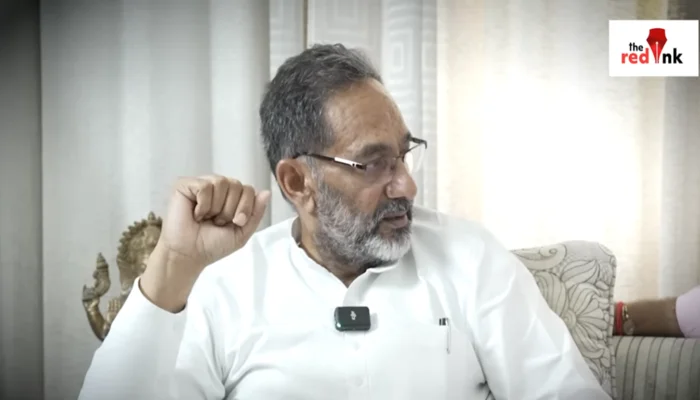
Case Summary
Samajwadi Party spokesperson Rajkumar Bhati insulted Hindu religious sentiments in a YouTube interview with 'The Red Ink' by deliberately distorting sacred Hindu scriptures and mocking revered deities. His remarks went beyond critique and amounted to targeted denigration of Sanatan Dharma, designed to demean Hindu beliefs and traditions. In his comments, Bhati further distorted the Ramayana by portraying Lord Ram’s dharmic act of slaying Bali as cowardly, falsely claiming Ram admitted to killing while hiding. He ignored the context of Bali’s tyranny and deceit, instead framing Ram as unethical. Similarly, while discussing the Shurpanakha episode, Bhati stripped away its crucial context and mocked Ram for supposedly allowing Lakshmana’s response. In the Ramayana, Shurpanakha, the demoness sister of Ravana, approached Lord Ram with lustful advances. When Ram gently rejected her and redirected her toward Lakshmana, she became enraged and turned her aggression toward Sita, attempting to physically attack her. To protect Sita, Lakshmana intervened by disfiguring Shurpanakha and cutting off her nose. This act was not senseless violence but a protective response to a clear threat against Sita. By omitting these details, Bhati twisted the episode to falsely present Ram and Lakshmana as unethical, deliberately undermining their protective and dharmic role. Bhati also denigrated the Manusmriti, branding it a “garbage text” and accusing it of promoting caste discrimination and oppression of women, while dismissing its cultural and historical significance. He further demeaned Hindu traditions by alleging that Hindu religious leaders are fraudulent and insisted that people should abandon established customs. Through these statements, Bhati deliberately twisted sacred texts and maligned deities, presenting Hinduism as immoral and regressive. His remarks did not represent academic critique but a targeted attack on Sanatan Dharma, its revered figures, and its foundational scriptures, directly hurting Hindu sentiments. Interestingly, Bhati was recently seen praising Prophet Muhammad on National television, making his contemptuous remarks on Hinduism even more stark. This came in the backdrop of the “I Love Muhammad” protests launched by Muslims across India, a campaign that from beginning to end has been anti-Hindu in its messaging and execution. The 'I Love Muhammad' campaign began with coordinated poster campaigns across India, not confined to Muslim localities but deliberately pasted in Hindu-dominated neighbourhoods, temples, and public spaces to assert religious supremacy and provoke reactions. Soon, these posters became rallying points for processions where violent slogans like “Sar Tan Se Juda” (beheading) were raised, police were attacked, and public property was vandalised. In city after city, from Kanpur, Kolkata, Bareilly, to Varanasi, the campaign translated into direct hostility toward Hindus, with processions turning aggressive whenever Hindu festivals, idols, or chants were present nearby. Even the choice of slogan “If there is war in the Prophet’s name, even cowards like us will fight in the first row” openly targeted Hindus, framing them as adversaries in a religious battle.
Why it is Hate Crime ?
This case has been added to the tracker under the primary category of - Hate speech against Hindus. Within it, the sub-category selected is - Anti-Hindu slurs, mocking faith, Anti-Hindu slurs and the deliberate mocking of the Hindu faith owing to religious animosity involve the usage of derogatory terms, stereotypes, or offensive references to religious practices, symbols, or figures. One of the common anti-Hindu slurs used against Hindus is “cow-worshipper” and “cow piss drinker”. The intention of using this term is to demean and mock Hindus as a group and their religious beliefs since Hindus consider the cow holy. Additionally, some symbols and the slurs attached to them have a historical context that exacerbates the insult, hate, stereotyping, dehumanisation and oppression against Hindus. Cow worship has been used for centuries to denigrate Hindus, insult their faith and oppress Hindus specifically as a religious group. There has been overwhelming documentation about how cow slaughter has been used to persecute Hindus with cow meat being thrown in temples and places of worship. There has also been overwhelming documentation where cow meat (beef) has been force-fed to Hindus to either forcefully convert them to Islam or denigrate their faith. Apart from cow worship, the Swastika – which holds deep religious significance for the Hindus – has also been misinterpreted and distorted to use as a slur against Hindus. Similarly, the worship of the Shivling has been used by supremacist ideologies and religions to denigrate Hindus owing to religious animosity. Such slurs and denigration stem out of inherent animosity and hate towards Hindus and their faith, therefore, it is categorised as hate speech targeted at Hindus specifically owing to their religious identity. The other sub-category relevant here is - Subversion of scriptures. Subverting the religious scriptures of Hindus has particularly devastating consequences. Subversion of the scriptures of Hindus is often done to justify or promote hatred, discrimination, or violence against specific individuals or groups of Hindus. Religious scriptures are often nuanced and those who harbour religious animosity towards Hindus often misquote or misrepresent the scripture to legitimise their animosity and hate towards the faith and its adherents. Any such misquoting of scriptures or subversion to justify hate, violence and discrimination against Hindus owing to religious animosity is hate speech and is categorised as such. This case was added to the tracker because Samajwadi Party spokesperson Rajkumar Bhati deliberately insulted Hindu religious sentiments by misinterpreting and misrepresenting Hindu scriptures in an interview with the YouTube channel, "The Red Ink." Bhati's interpretation of the Bali episode involved deliberate distortion of context. While it is true that Ram killed Bali from a concealed position, this action was consistent with Dharma, as Bali had committed multiple transgressions, including exiling his brother Sugriva, keeping Sugriva’s wife hostage, and ruling his kingdom through oppression and violence. Lord Ram, as an avatar of Vishnu, acted to restore justice and uphold dharma. The killing, though executed from hiding, was a rajdharma action, reflecting the king’s duty to protect the innocent and punish tyranny. Misrepresenting this episode as cowardly or malicious ignores the ethical and social principles embedded in the narrative, including the idea that kings must act strategically to uphold dharmic law. A similar distortion was seen with his description of the Shurpanakha episode, where Bhati ignored context and intent. Shurpanakha, a powerful demoness and sister of Ravana, approached Ram with romantic advances, which he politely rejected. Enraged by the rejection, she attempted to attack Sita, which could have proved fatal, since Shurpanakha was a demoness and a powerful being herself. Thus, Lakshmana’s action of cutting off her nose was a defensive and morally justified response, aimed at protecting Sita and upholding dharma. By presenting this act as unjust or cruel against women, Bhati deliberately undermined the moral and protective framework of Hindu scripture, erasing the reasons behind Ram and Lakshmana’s actions and creating a false narrative that mocked their ethical conduct. In his commentary on the Manusmriti, Bhati judged the text using contemporary moral standards, disregarding the historical and social context of ancient Indian society, where norms and roles were structured differently. The Manusmriti is one of the foundational texts in Hinduism, traditionally attributed to the sage Manu. It serves as a dharmaśāstra, offering guidance on various aspects of life, including morality, law, and social conduct. It is a symbol of Hindu cultural and religious heritage, and desecrating the holy text can be viewed as an affront to Hinduism. The Samajwadi Party leader dismissed the Manusmriti outrightly as “garbage.” This was an intentional act designed to insult and provoke Hindu religious sentiments rather than offer a scholarly critique. This demonstrated a deliberate subversion of scripture, which can legitimise disdain and hostility towards the faith. There could be no other reason than an inherent animosity against Hinduism that led the politician to commit the offence. Bhati also made sweeping statements asserting that Hindu religious leaders were fraudulent and that people should have a direct connection with God rather than following their guidance. This ignored the centuries-long role of Hindu leaders, who have historically provided spiritual guidance, moral instruction, and social cohesion. While a few bad apples do exist, it doesn’t ignore or diminish their contribution in indian society. Bhati’s generalisation painted all Hindu leaders and institutions as deceitful, thereby inciting hostility against Hindus, especially Brahmins, as a religious group. Seen together, Bhati’s statements were not an academic critique but a deliberate effort to ridicule Hindu scriptures, deities, and institutions. By portraying Hinduism as unethical, regressive, and fraudulent, he incited contempt against the Hindu faith and its followers. Besides his anti-Hindu remarks, Bhati was also recently seen singing accolades for Prophet Muhammad. In this context, his open praise of Prophet Muhammad cannot be dismissed as a casual or offhand remark. Coming at a time when the “I Love Muhammad” protests are ongoing across India, protests that have consistently turned into anti-Hindu displays of intimidation, his praise takes on greater significance. Coupled with his deliberate misrepresentation of Hindu scriptures and mocking of deities, it underscores his anti-Hindu intent and aligns his rhetoric with the same campaign of hostility driving the protests. Given the context of the ongoing ‘I Love Muhammad’ protests and Bhati’s own past praise of Prophet Muhammad, his deliberate attack on Hindu beliefs is best understood as targeted religious hostility. For these reasons, the case qualifies as hate speech against Hindus and is rightly included in the Hinduphobia Tracker database.


Case Status
Unknown


Perpetrators Details
Perpetrators
State and Establishment
Perpetrators Range
One Person
Perpetrators Gender
male
 Sources




