Local Hindu women harassed, Muslim men say they will teach Hindus a lesson
 Baghpat, Uttar Pradesh, India
  30 August, 2024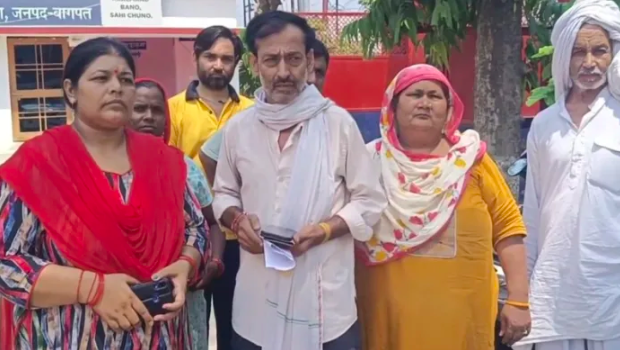
Case Summary
In Baghpat district, Uttar Pradesh, several Hindu women accused local Muslim youths of harassment, obscenity and death threats. They said that these youths urinate in front of their homes and threaten to evict them if they protest. On September 1, 2024, three women from Laxminagar filed a complaint at the Khekra police station, detailing how accused individuals—Chand, Anees, Sohail, Sahil, Javed and Saad gathered outside their homes to gamble and engage in drug use, while making lewd comments and singing vulgar songs. On August 31, the victims confronted the accused, leading to an escalation where the youths verbally abused them and threatened their safety. The women reported that the accused openly expressed their dominance, stating, "We will make it difficult for you to live here," and further intimidated them with claims of being armed. The women of the accused's family also gathered. They said, "You Hindus, you are getting too aggressive. We will teach you a lesson today." Another accused told them, "We also have weapons and guns. We also know how to use them. Either you stay here quietly and tolerate what we are doing, all of you leave your homes from here or else all of you will be killed." The victims reported being surrounded, threatened with violence and warned of consequences for taking legal action, including potential harm to their children. They expressed their fear for their safety and demanded strict legal action against the perpetrators.
Why it is Hate Crime ?
This case has been added to the hate tracker under two prime categories. The first is- attack not resulting in death. Under this, the sub-category selected is- attacked for Hindu identity- In several cases, Hindus are attacked merely for their Hindu identity without any perceived provocation. A classic example of this category of religiously motivated hate crime is a murder in 2016. 7 ISIS terrorists were convicted for shooting a school principal in Kanpur because they got ‘triggered’ seeing the Kalava on his wrist and tilak that he had put. In this, the Hindu victim had offered no provocation except for his Hindu religious identity. The motivation for the murder was purely religious, driven by religious supremacy. Such cases where Hindus are targeted merely for their religious identity would be documented as a hate crime under this category. The second prime category relevant here is- Hate speech against Hindus and within this the sub-category selected is- violent threats- Violent threats, explicit, implicit or implied, is the most dangerous form of hate speech since it goes beyond discriminatory and prejudicial language to express the intent of causing harm to an individual or a group of people based on their religious identity and faith. There could be several different kinds of threats that are issued to Hindus based on religious animosity. An explicit threat would mean the direct threat of violence towards an individual Hindu, a group of Hindus or Hindus at large. Physical violence, death threats, threats of destruction of property belonging to Hindus and threats of genocide would mean explicit threats against Hindus for their religious identity. Implicit threats may not be a direct threat but implied through the use of symbols of actions – for example – in the Nupur Sharma case, other than explicit threats, there were also implicit threats when Islamists took to the streets to burn and beat her effigies. It implies that they want to do the same to Nupur Sharma – thereby is considered an implicit threat. Violent threats can be delivered in person, through letters, phone calls, graffiti, or increasingly through social media and other online platforms. It would be important to understand that a threat – explicit or implicit, online or offline – to an individual who happens to be a Hindu does not qualify as a religiously motivated threat. Such a threat, while vile and dangerous, could be owing to non-religious reasons and/or personal animosity. To qualify as a religiously motivated threat, it would need to exhibit an indication that the individual is being targeted for religious reasons and/or owing to his/her religious identity as a Hindu. The details of the case reveal that the Muslim men in the locality were specifically singling out and targeting Hindu women. Their actions—harassment, vulgar behaviour, and threats of violence—clearly demonstrate an intention to assert dominance over the Hindu community. The statements made by the accused, such as "You Hindus, you are getting too aggressive" and the threats of eviction and death, highlight the animosity the perpetrators harboured toward the Hindu women based on their religious identity. The systematic targeting and intimidation, coupled with the threats to force the women out of their homes, point to religious animosity being a central factor behind these actions. The aggressive behaviour aimed at asserting dominance underscores the deep-rooted hostility driving this harassment.
Victim Details
Total Victim
3
Deceased
0
Gender
- Male 0
- Female 3
- Third Gender 0
- Unknown 0
Caste
- SC/ST 0
- OBC 0
- General 0
- Unknown 3
Age Group
- Minor 0
- Adult 3
- Senior Citizen 0
- Unknown 0


Case Status
Complaint filed


Perpetrators Details
Perpetrators
Muslim Extremists
Perpetrators Range
From 5 to 10
Perpetrators Gender
male
 Sources




