Muslim man rapes a 12-year-old girl in a graveyard, media mislabels perpetrator as Hindu instead
 Rohini, Delhi, India
  25 August, 2024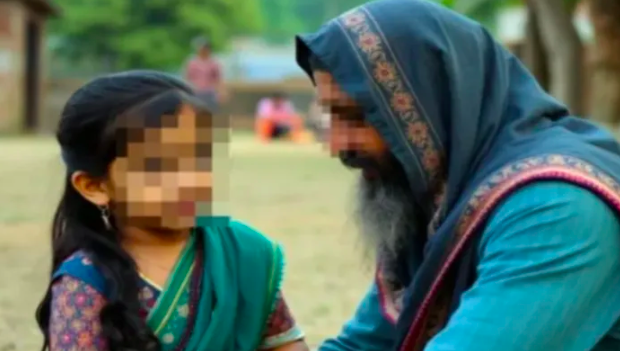
Case Summary
On August 26, 2024, in the Kanjhawala police station area of Delhi, a 52-year-old man named Mohammad Sharif took a 12-year-old (7 or 9-year-old in some reports) Muslim girl to the graveyard on the pretext of exorcism and raped her. The victim's father, a fruit seller with a chronic illness, stated that Sharif regularly visited their home under the pretext of performing exorcisms to cure his illness. On the day of the incident, Sharif lured the girl to his house with the promise of giving her ration, but the plan failed when her brother went instead. Later, he convinced the minor girl to meet him for "black magic" to cure her ailing father. He took her to the bushes near a cemetery and sexually assaulted her. When the victim cried, Sharif attempted to calm her by offering money and then threatened to kill her father if she spoke about the incident. Based on the family's complaint, the accused Mohammad Sharif was arrested. However, while reporting on the case, several media houses like The Indian Express, Times Now and India Today carried misleading headlines of a "Tantrik" raping a minor girl. In several past instances, efforts have been made to label an accused peer or exorcist as a "Tantrik" to give a Hindu spin to the crime and obscure the accused's religious identity.
Why it is Hate Crime ?
This case has been added to the hate tracker as a religiously motivated hate crime under the prime category- Hate speech against Hindus. Under this, the sub-category selected is- 'anti-Hindu subversion or prejudice', within which, the tertiary category 'Mislabelling/Misrepresentation of perpetrator's religion as Hindu' has been chosen as per case details. Hate speech is defined as any speech, gesture, conduct, writing, or display that is prejudicial against a specific individual and/or group of people, which is leading to or may lead to violence, prejudicial action or hate against that individual and/or group. Media plays a specific and overarching reach in perpetuating prejudicial attitudes towards a community owing to unfair, untrue coverage and/or misrepresentation/misinterpretation, selective coverage and/or omission of facts of/pertaining to issues affecting a specific religious group. This type of bias can dehumanise the victim group, making it easier for others to justify harmful actions against them, which aligns with the objectives of hate speech laws aimed at preventing such harm. It is often observed that the media takes a prejudicial stand against the Hindu community driven by their need to shield the aggressor community which happens to be a numeric minority, however, is the one perpetrating violence against Hindus. For example, the media is often quick to contextualise religiously motivated crimes against Hindus, omit or misrepresent facts that point towards religiously motivated hate crimes, justify and/or downplay religiously motivated hate crimes or simply present fake news to stereotype Hindus. Such media bias leads to the denial of persecution and is often used to dehumanise Hindus, leading to justification for violence against them. For example, the media covered several fake allegations of Hindus targeting Muslims and forcing them to chant Jai Shree Ram. Most of these cases were proved false and fabricated after police investigation. These fake news reports were subsequently never retracted or clarified. Such fake news led to the justification of violence and dehumanisation of Hindus based on the argument that since Hindus targeted Muslims and forced them to chant Jai Shree Ram, the dehumanisation of Hindus and violence against them was par for the course and merely a retaliation. Such media bias leads to prejudicial portrayal of Hindus and offers a justification for violence against them and therefore, is considered hate speech under this category. In this case, the media's portrayal of Mohammad Sharif as a "Tantrik" gave a misleading "Hindu spin" to a crime committed by a Muslim individual. In general parlance, the Tantrik – a practitioner of the “tantra vidya“, is mainly associated with Hinduism, leading to a perception that the crime was committed by a Hindu individual. This deliberate misrepresentation not only distorts the facts but also reflects a deeper bias, aiming to obscure the religious identity of the actual perpetrator and shift blame onto Hindus. This act of shifting blame onto Hindus reflects a clear bias and is motivated by a desire to malign the Hindu community and this is why this case has been added to the hate tracker.


Case Status
Unknown


Perpetrators Details
Perpetrators
Others
Perpetrators Range
N/A
Perpetrators Gender
unknown
 Sources




