Dilshad becomes Hindu to only marry minor Hindu girl, had had continued to be a Muslim
 Gorakhpur, Uttar Pradesh, India
  20 January, 2022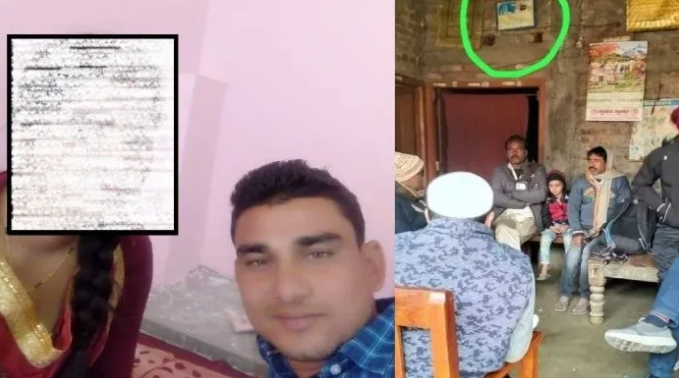
Case Summary
Dilshad Hussain, a resident of Vidhipur, Bihar, pretended to convert to Hinduism to marry a minor Hindu girl from Gorakhpur at an Arya Samaj temple in Hyderabad. Despite his conversion and adopting the name "Dilraj," he remained a practising Muslim. After his marriage, he continued following Islamic customs, including offering Eid prayers. The Arya Samaj temple, where his marriage took place, stated that the girl had presented documents proving her adulthood, but later reports revealed that she was a minor at the time of marriage. The girl’s father, Bhagwat Nishad, confirmed she was underage when Dilshad eloped with her and raped her. Dilshad's fake conversion and subsequent marriage became a point of controversy when left-wing media portrayed the case as a consensual relationship between two individuals. However, local sources confirmed that Dilshad’s conversion was merely a formality for marriage, and he never renounced his Muslim identity. On January 21, 2022, Dilshad was shot dead outside a Gorakhpur court by Bhagwat Nishad, the father of the minor girl he had eloped with and raped. Dilshad had been out on bail, facing charges under the Protection of Children from Sexual Offenses (POCSO) Act. Despite his claims of innocence, the girl's father killed him, believing his daughter had been taken advantage of. The police arrested Bhagwat Nishad for the murder, and the case remained under investigation. Interestingly, Dilshad's burial, conducted according to Islamic rituals, confirmed that he had not genuinely embraced Hinduism.
Why it is Hate Crime ?
Distinct elements in this particular case demonstrate that the crime was committed while harbouring a bias against the Hindu faith. As per case details, two prime categories have been selected here. The first prime category under which this case has been placed in the hate tracker is 'hate crime against women in relationship and sexual crimes'. Further, the sub-category that has been chosen under the above-mentioned category is- Man pretends to be Hindu and within this, two tertiary categories namely, 'Name Changed' and 'Marries as per Hindu rituals' have been selected. When a non-Hindu man pretends to be a Hindu to deceive a Hindu woman into a relationship, the act is seen as triggered by malafide intentions. In some cases, the woman eventually accepts the man’s original religious identity and converts after the man’s identity is revealed. These cases could be argued as cases of religious brainwashing and a result of the pressure a woman feels after getting into a relationship with a man. The woman, it can be argued, also changed her religious identity because of the stigma she believes she might face if she chooses to walk out of a deceptive relationship. However, for the purpose of documenting hate crimes, the cases in this subcategory are limited to those where there is explicit violence aimed at religious conversion against the wishes of the victim (force-feeding beef, blackmailing with intimate videos, rape on refusal to convert, etc), or if the woman herself complains of the man’s religious deception. In such cases, it is established that the deception of the non-Hindu man had a specific aim of religious conversion or targeting of the victim due to her Hindu religious identity, therefore, making it a religiously motivated hate crime. The second prime category selected here is- Hate speech against Hindus. Under this, the sub-category selected is- Media bias and the tertiary category selected within this is- Anti-Hindu Fake News or Downplaying. Hate speech is defined as any speech, gesture, conduct, writing, or display that is prejudicial against a specific individual and/or group of people, which is leading to or may lead to violence, prejudicial action or hate against that individual and/or group. Media plays a specific and overarching reach in perpetuating prejudicial attitudes towards a community owing to unfair, untrue coverage and/or misrepresentation/misinterpretation, selective coverage and/or omission of facts of/pertaining to issues affecting a specific religious group. This type of bias can dehumanise the victim group, making it easier for others to justify harmful actions against them, which aligns with the objectives of hate speech laws aimed at preventing such harm. It is often observed that the media takes a prejudicial stand against the Hindu community driven by their need to shield the aggressor community which happens to be a numeric minority, however, is the one perpetrating violence against Hindus. For example, the media is often quick to contextualise religiously motivated crimes against Hindus, omit or misrepresent facts that point towards religiously motivated hate crimes, justify and/or downplay religiously motivated hate crimes or simply present fake news to stereotype Hindus. Such media bias leads to the denial of persecution and is often used to dehumanise Hindus, leading to justification for violence against them. For example, the media covered several fake allegations of Hindus targeting Muslims and forcing them to chant Jai Shree Ram. Most of these cases were proved false and fabricated after police investigation. These fake news reports were subsequently never retracted or clarified. Such fake news led to the justification of violence and dehumanisation of Hindus based on the argument that since Hindus targeted Muslims and forced them to chant Jai Shree Ram, the dehumanisation of Hindus and violence against them was par for the course and merely a retaliation. Such media bias leads to prejudicial portrayal of Hindus and offers a justification for violence against them and therefore, is considered hate speech under this category. The case of Dilshad Hussain, who pretended to convert to Hinduism to marry a Hindu girl, highlights a religiously motivated hate crime where his conversion was merely an eyewash to trap the Hindu minor girl for conversion and marriage. Here, local sources also confirmed that Dilshad’s conversion was merely a formality for marriage, and he never renounced his Muslim identity. This manipulation of religious identity is an act of deliberate and calculated affront to the victim's religious identity and exhibits a deep-seated animosity the perpetrator harboured towards her faith. Further, it is important to note here that the Hindu victim was a minor, which means that the element of consent and genuine change of conscience was missing ab initio. Minors, due to their young age and lack of maturity, are particularly vulnerable to manipulation and coercion. They may not have the ability to fully understand the implications of converting to another religion and the Muslim perpetrator purposely targeted and exploited this vulnerability of the victim. Despite the religious motive of the crime being evident from the facts of the case, left-wing media framed the incident as a consensual relationship, downplaying the religious deception and the broader implications of such actions. The selective reporting and minimization of the religious aspects reflect media bias, further complicating the narrative of religiously motivated crimes.
Victim Details
Total Victim
1
Deceased
0
Gender
- Male 0
- Female 1
- Third Gender 0
- Unknown 0
Caste
- SC/ST 0
- OBC 0
- General 0
- Unknown 1
Age Group
- Minor 1
- Adult 0
- Senior Citizen 0
- Unknown 0


Case Status
Unknown


Perpetrators Details
Perpetrators
Muslim Extremists
Perpetrators Range
One Person
Perpetrators Gender
male
 Sources




