Targeted religious persecution of Hindus in Bangladesh whitewashed by Bangladeshi Muslim 'journalist'
 Dhaka District, Bangladesh
  22 August, 2024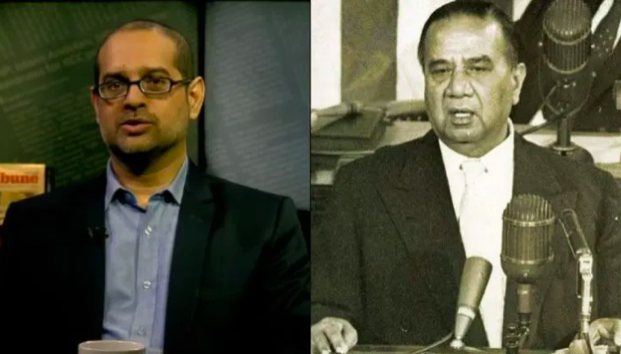
Case Summary
In an article titled “10 Things India Needs to Know About Bangladesh,” Dhaka Tribune editor Zafar Sobhan attempted to downplay and rationalise religiously motivated attacks on Hindus in Bangladesh by Muslim extremists. Published on August 23, 2024, the piece argued that Hindus were not intentionally targeted, instead framing the violence as a product of general lawlessness following political upheaval. Sobhan wrote that “Hindus are not in danger,” conceding that some members of the community were affected during the unrest but rejecting the notion of a deliberate anti-Hindu campaign. Sobhan characterised the violence as a byproduct of instability, stating that “at times like this, those targeted are often the most powerless,” implying that minorities across South Asia are naturally vulnerable. This framing minimised the religious element of the attacks, presenting the assaults on Hindus as incidental rather than systemic. He further argued that “the notion that Hindus were the subject of some kind of pogrom... is a fiction,” distancing the violence from religious motives and attributing it instead to political turbulence. The editor highlighted cases of Muslims and Hindus allegedly cooperating to safeguard temples during the riots. Critics, however, observed that while Sobhan identified the defenders by religion, he omitted similar identification of the Muslim aggressors—a rhetorical choice often seen as an attempt to dilute or obscure communal motives behind anti-Hindu attacks. Sobhan also drew contentious comparisons between India and Bangladesh, asserting that minorities enjoy greater safety in Bangladesh than in India, and dismissing concerns over the religious persecution of Hindus. Critics countered that this claim ignored demographic realities: while the Muslim population in India has grown from 9.84% in 1947 to 14.09% in 2011, the Hindu population in Bangladesh has sharply declined over the same period. Commentators further pointed to Sobhan’s familial connection to Huseyn Shaheed Suhrawardy—infamously dubbed the “Butcher of Bengal” for his role in the Direct Action Day riots of 1946, which unleashed widespread anti-Hindu violence. As a senior Muslim League leader, Suhrawardy was manipulating law enforcement and encouraging mobs to attack Hindus in a campaign that ultimately sought to push Bengal towards inclusion in Muslim-majority Pakistan.
Why it is Hate Crime ?
This case has been added to the tracker under the primary category- Hate Speech against Hindus. The subcategory selected is- Anti-Hindu subversion and prejudice. The tertiary category selected is- Anti-Hindu fake news or downplaying. Hate speech is defined as any speech, gesture, conduct, writing, or display that is prejudicial against a specific individual and/or group of people, which is leading to or may lead to violence, prejudicial action or hate against that individual and/or group. Media plays a specific and overarching reach in perpetuating prejudicial attitudes towards a community owing to unfair, untrue coverage and/or misrepresentation/misinterpretation, selective coverage and/or omission of facts of/pertaining to issues affecting a specific religious group. This type of bias can dehumanise the victim group, making it easier for others to justify harmful actions against them, which aligns with the objectives of hate speech laws aimed at preventing such harm. It is often observed that the media takes a prejudicial stand against the Hindu community driven by their need to shield the aggressor community which happens to be a numeric minority, however, is the one perpetrating violence against Hindus. For example, the media is often quick to contextualise religiously motivated crimes against Hindus, omit or misrepresent facts that point towards religiously motivated hate crimes, justify and/or downplay religiously motivated hate crimes or simply present fake news to stereotype Hindus. Such media bias leads to the denial of persecution and is often used to dehumanise Hindus, leading to justification for violence against them. For example, the media covered several fake allegations of Hindus targeting Muslims and forcing them to chant Jai Shree Ram. Most of these cases were proved false and fabricated after police investigation. These fake news reports were subsequently never retracted or clarified. Such fake news led to the justification of violence and dehumanisation of Hindus based on the argument that since Hindus targeted Muslims and forced them to chant Jai Shree Ram, the dehumanisation of Hindus and violence against them was par for the course and merely a retaliation. Such media bias leads to prejudicial portrayal of Hindus and offers a justification for violence against them and therefore, is considered hate speech under this category. Zafar Sobhan’s article “10 Things India Needs to Know About Bangladesh” represents a clear case of religiously motivated hate speech aimed at the Hindu community. By devoting an entire commentary to downplaying and justifying the persecution of Hindus in Bangladesh, Sobhan not only trivialised their suffering but also reinforced narratives that enable further violence. His categorical claim that “Hindus are not in danger” works as an instrument of denial and misinformation. It seeks to obscure the systematic religious persecution of Hindus at the hands of Muslim extremists. By portraying the attacks as coincidental casualties of “lawlessness” and political upheaval, Sobhan effectively erased the religious dimension of these crimes, making Hindus feel that their persecution is imaginary or exaggerated. This rhetorical manipulation minimises the trauma of victims and deflects the urgent need for international and social intervention to protect them. The period following Sheikh Hasina’s violent exile in August 2024 witnessed widespread anti-Hindu attacks across Bangladesh. Hindu temples were vandalised, homes were looted, women were assaulted, men were killed, and in many documented cases, forced conversions took place. These events leave no room for ambiguity about the religious motivations behind the violence. For Sobhan to dismiss this reality as a mere byproduct of political instability is to whitewash atrocities and exonerate perpetrators. Calling the pogrom of Hindus “a fiction” is not only factually false but morally reprehensible. It belittles the gravity of organised violence committed explicitly on the basis of religious identity. Furthermore, by invoking unverified accounts of “Muslims safeguarding temples,” Sobhan attempted to construct a false moral equivalence designed to obscure the communal nature of the attacks. This selective narrative aligns with patterns used historically to minimise or justify violence against Hindu minorities—thereby making his statements an example of hate-driven misinformation that normalises prejudice against Hindus. Sobhan’s comparison between the condition of minorities in India and Bangladesh further reveals the religious animosity underlying his position. His claim that minorities are safer in Bangladesh than in India disregards verifiable demographic data showing the inverse reality. While the Muslim population in India has grown from 9.84% in 1947 to 14.09% in 2011, the Hindu population in Bangladesh has drastically declined over the same period. These facts clearly invalidate his argument and expose his intent to malign India while dismissing the persecution experienced by Hindus in Bangladesh. This deliberate distortion of data reflects religious bias, aimed at shielding Islamist aggression by falsely projecting Bangladesh as tolerant and India as discriminatory. Such manipulation of facts to vilify one group while absolving another qualifies as a form of hate propaganda against the Hindu community. Finally, Sobhan’s hereditary connection to Huseyn Shaheed Suhrawardy—the “Butcher of Bengal” responsible for orchestrating the anti-Hindu massacres during Direct Action Day in 1946—underscores a historical continuity of ideology rooted in communal hostility. Suhrawardy’s complicity in the slaughter, rape, and forced conversion of more than 5,000 Hindus during that event remains one of history’s most brutal pogroms. Sobhan’s attempt to rationalise similar patterns of anti-Hindu violence in the present day shows not only insensitivity but a deeply entrenched animus towards the Hindu community. His rhetoric, couched in political justification, normalises religious persecution by portraying it as incidental or fabricated. As such, his article constitutes a form of religiously motivated hate speech—it denies victims their lived reality, promotes misinformation favourable to the aggressors, and perpetuates historical patterns of anti-Hindu hostility in Bangladesh. Contrary to the accused's claim, Hinduphobia Tracker documented several instances of Hindus being targeted for their religious identity in Bangladesh following Sheikh Hasina’s exile. On 5th August 2024, in the Pirojpur district, Hindus were brutally attacked by a Muslim mob. Hindu homes were selectively targeted, attacked, and looted. A Hindu woman was also brutally gang-raped by members of the Muslim mob. In another instance, Jhenaidah saw extensive violence with ongoing attacks, vandalism, and looting at the homes of 10 Hindu families in Chaklapara municipality. Hindu shops in Kotchandpur were also attacked and looted. In Tilpatti, Bargola, 5-7 Hindu shops were attacked, vandalised, and looted. Similarly, the house of Dr Gautam Kumar Mondal in Sahapukur village, Dupchanchia Upazila, was attacked and looted. The house of Sahadev Roy in Sonadia, Hatiya, Noakhali, was attacked and looted. In Thakurgaon, Hindu homes in the Sadar were attacked, vandalised, and looted. Additionally, in ward 2 of Pirganj, the cremation temple was attacked and burnt. In Patuakhali, the Radha Govinda Temple in Kuakata was attacked and vandalised. The house of Ananta Mukherjee was attacked, vandalised, and looted. Hindu homes in wards 2 and 3 of the Sadar, Panchagarh, were attacked, vandalised, and looted. The deliberate targeting of Hindus, as an oppressed minority, and the media’s failure to accurately report this reality is emblematic of anti-Hindu bias—one that dehumanises the victims and obscures the true nature of the genocide the Hindu community endures. This deliberate distortion and minimisation of anti-Hindu violence not only silences the victims but also emboldens Muslim extremists and undermines efforts for justice and protection of Hindus. Given that this case meets the parameters of a hate speech targeting Hindus, it is being added to the hate crime database of the Hinduphobia Tracker. Note: The Hinduphobia Tracker has documented several cases of religious persecution of Hindu minorities in Bangladesh. To read these cases, please visit our official website- hinduphobiatracker.org.


Case Status
Unknown


Perpetrators Details
Perpetrators
Muslim Extremists
Perpetrators Range
One Person
Perpetrators Gender
male
 Sources




